The global analgesics market was estimated at USD 77.51 billion in 2021 and it is expected to surpass around USD 128.74 billion by 2030, poised to grow at a CAGR of 5.8% from 2022 to 2030.
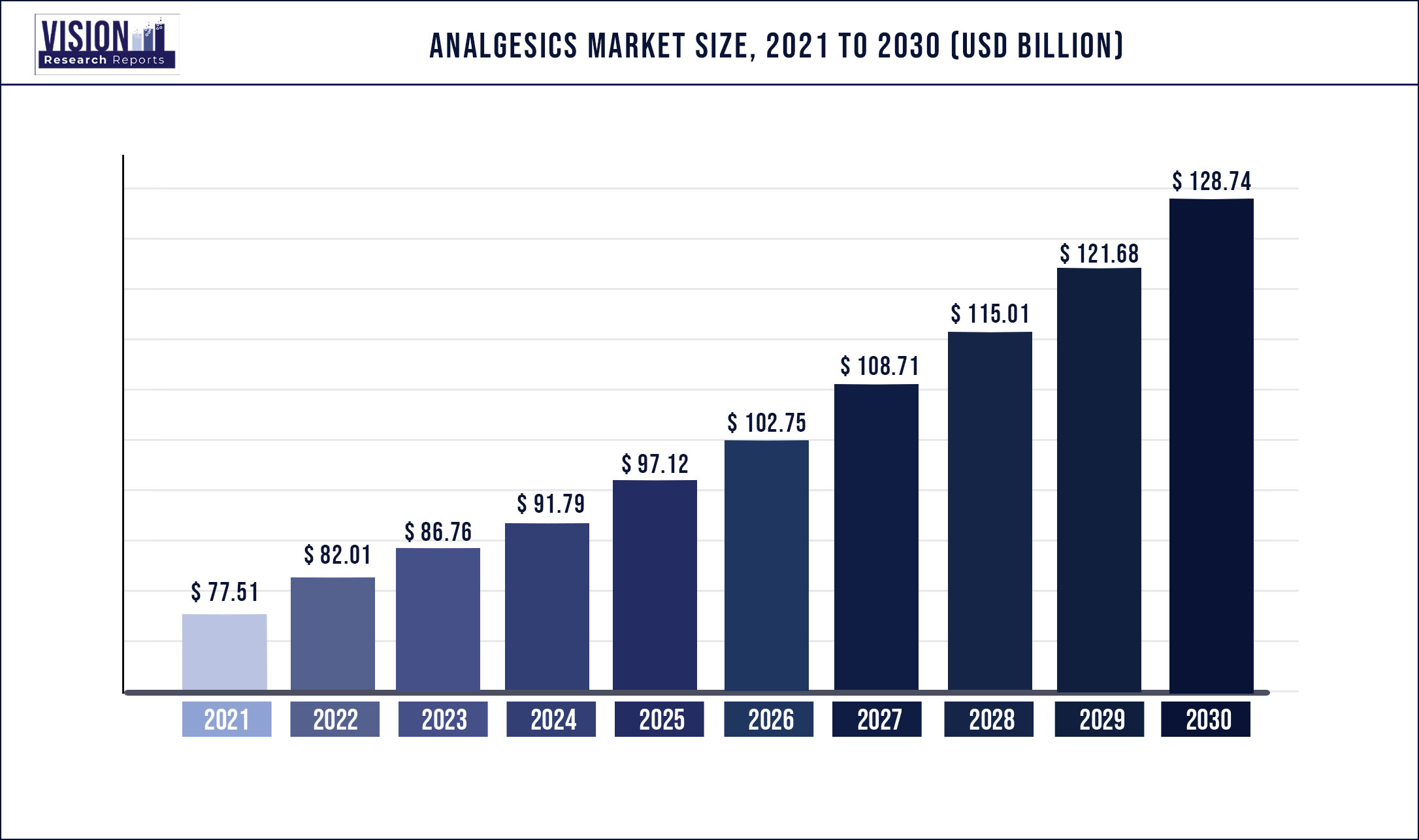
Pain relieving analgesics are available over the counter, but strong variants are available only with prescription. This is due to the side-effects associated with strong analgesics such as addiction, dependence, and withdrawal symptoms. The space has a substantial presence of non-opioid such as NSAIDs for treating mild to moderate pain, opioid analgesics treating moderate to severe conditions and compound analgesics containing combination of non-opioids along with opioid such as low strength codeine.
Global rise in prevalence of chronic diseases such as cardiovascular disorder and cancer, increasing ageing population is fueling the demand in the market. In 2018, according to the CDC, over 27.5% of U.S. adult population is suffering from multiple chronic conditions. In addition, upsurge in healthcare expenditure is accelerating this segment of pharma industry.
The market has been mainly segmented as:
Scope of The Report
| Report Coverage | Details |
| Market Size in 2021 | USD 77.51 billion |
| Revenue Forecast by 2030 | USD 128.74 billion |
| Growth rate from 2022 to 2030 | CAGR of 5.8% |
| Base Year | 2021 |
| Forecast Period | 2022 to 2030 |
| Segmentation | Drug Type, Route of Administration, Applications, Distribution Channel, Region |
| Companies Covered |
Bayer AG, Pfizer Inc., F. Hoffmann-La Roche Ltd., Endo Pharmaceuticals, Inc., Bristol-Myers Squibb Company, Assertio Therapeutics, Inc. Sanofi, Janssen Pharmaceuticals, Inc., Novartis AG, and GlaxoSmithKline PLC. |
The advancement in designing novel formulations to enhance utility or improved safety of existing medications is driving the market growth. For example, Sun Pharma’s Volini Maxx is available is pain reliving spray. Similarly, morphine, tramadol and oxycodone are available as novel extended release, diclofenac, lidocaine and fentanyl patches as local route of administration, and oral lozenges of fentanyl.
The rising cases of unsuccessful pain management with opioid analgesics is demanding higher doses of drugs. However, this is leading to drug tolerance and eventually increasing risk of addiction. Strategically commercializing opioid-tolerant drugs with reduced side effects is offering lucrative opportunity for market growth. In addition, this drug class is associated with non-medical and illegal use, encouraging physicians to prescribe non-opioid analgesics. Thus, an opportunity for key players to develop such novel segment.
Furthermore, key players in the analgesics market are undertaking initiatives focusing on innovations, developing novel approaches, mergers, and regional expansions. For instance, in May 2020, Assertio Therapeutics, Inc. announced merger of Zyla Life Sciences, an initiative to commercially grow pain management products of Zyla. Moreover, in September 2020 launch of GlaxoSmithKline’s Advil Dual Action formulation, consisting of drug combination such as acetaminophen and ibuprofen is expected to drive the market growth.
Key Players
Market Segmentation
Chapter 1. Introduction
1.1. Research Objective
1.2. Scope of the Study
1.3. Definition
Chapter 2. Research Methodology
2.1. Research Approach
2.2. Data Sources
2.3. Assumptions & Limitations
Chapter 3. Executive Summary
3.1. Market Snapshot
Chapter 4. Market Variables and Scope
4.1. Introduction
4.2. Market Classification and Scope
4.3. Industry Value Chain Analysis
4.3.1. Raw Material Procurement Analysis
4.3.2. Sales and Distribution Channel Analysis
4.3.3. Downstream Buyer Analysis
Chapter 5. COVID 19 Impact on Analgesics Market
5.1. COVID-19 Landscape: Analgesics Industry Impact
5.2. COVID 19 - Impact Assessment for the Industry
5.3. COVID 19 Impact: Global Major Government Policy
5.4. Market Trends and Opportunities in the COVID-19 Landscape
Chapter 6. Market Dynamics Analysis and Trends
6.1. Market Dynamics
6.1.1. Market Drivers
6.1.2. Market Restraints
6.1.3. Market Opportunities
6.2. Porter’s Five Forces Analysis
6.2.1. Bargaining power of suppliers
6.2.2. Bargaining power of buyers
6.2.3. Threat of substitute
6.2.4. Threat of new entrants
6.2.5. Degree of competition
Chapter 7. Competitive Landscape
7.1.1. Company Market Share/Positioning Analysis
7.1.2. Key Strategies Adopted by Players
7.1.3. Vendor Landscape
7.1.3.1. List of Suppliers
7.1.3.2. List of Buyers
Chapter 8. Global Analgesics Market, By Drug Type
8.1. Analgesics Market, by Drug Type, 2022-2030
8.1.1. Opioid
8.1.1.1. Market Revenue and Forecast (2017-2030)
8.1.2. Non-opioid
8.1.2.1. Market Revenue and Forecast (2017-2030)
8.1.3. Compound medication
8.1.3.1. Market Revenue and Forecast (2017-2030)
Chapter 9. Global Analgesics Market, By Route of Administration
9.1. Analgesics Market, by Route of Administration, 2022-2030
9.1.1. Oral
9.1.1.1. Market Revenue and Forecast (2017-2030)
9.1.2. Parenteral
9.1.2.1. Market Revenue and Forecast (2017-2030)
9.1.3. Transdermal
9.1.3.1. Market Revenue and Forecast (2017-2030)
9.1.4. Others
9.1.4.1. Market Revenue and Forecast (2017-2030)
Chapter 10. Global Analgesics Market, By Applications
10.1. Analgesics Market, by Applications, 2022-2030
10.1.1. Musculoskeletal
10.1.1.1. Market Revenue and Forecast (2017-2030)
10.1.2. Surgical and Trauma
10.1.2.1. Market Revenue and Forecast (2017-2030)
10.1.3. Cancer
10.1.3.1. Market Revenue and Forecast (2017-2030)
10.1.4. Neuropathic
10.1.4.1. Market Revenue and Forecast (2017-2030)
10.1.5. Migraine
10.1.5.1. Market Revenue and Forecast (2017-2030)
10.1.6. Obstetrical
10.1.6.1. Market Revenue and Forecast (2017-2030)
10.1.7. Fibromyalgia
10.1.7.1. Market Revenue and Forecast (2017-2030)
10.1.8. Pain due to Burns
10.1.8.1. Market Revenue and Forecast (2017-2030)
10.1.9. Dental/Facial
10.1.9.1. Market Revenue and Forecast (2017-2030)
10.1.10. Pediatric
10.1.10.1. Market Revenue and Forecast (2017-2030)
Chapter 11. Global Analgesics Market, By Distribution Channel
11.1. Analgesics Market, by Distribution Channel, 2022-2030
11.1.1. Hospital pharmacies
11.1.1.1. Market Revenue and Forecast (2017-2030)
11.1.2. Retail pharmacies
11.1.2.1. Market Revenue and Forecast (2017-2030)
11.1.3. Online pharmacies
11.1.3.1. Market Revenue and Forecast (2017-2030)
Chapter 12. Global Analgesics Market, Regional Estimates and Trend Forecast
12.1. North America
12.1.1. Market Revenue and Forecast, by Drug Type (2017-2030)
12.1.2. Market Revenue and Forecast, by Route of Administration (2017-2030)
12.1.3. Market Revenue and Forecast, by Applications (2017-2030)
12.1.4. Market Revenue and Forecast, by Distribution Channel (2017-2030)
12.1.5. U.S.
12.1.5.1. Market Revenue and Forecast, by Drug Type (2017-2030)
12.1.5.2. Market Revenue and Forecast, by Route of Administration (2017-2030)
12.1.5.3. Market Revenue and Forecast, by Applications (2017-2030)
12.1.5.4. Market Revenue and Forecast, by Distribution Channel (2017-2030)
12.1.6. Rest of North America
12.1.6.1. Market Revenue and Forecast, by Drug Type (2017-2030)
12.1.6.2. Market Revenue and Forecast, by Route of Administration (2017-2030)
12.1.6.3. Market Revenue and Forecast, by Applications (2017-2030)
12.1.6.4. Market Revenue and Forecast, by Distribution Channel (2017-2030)
12.2. Europe
12.2.1. Market Revenue and Forecast, by Drug Type (2017-2030)
12.2.2. Market Revenue and Forecast, by Route of Administration (2017-2030)
12.2.3. Market Revenue and Forecast, by Applications (2017-2030)
12.2.4. Market Revenue and Forecast, by Distribution Channel (2017-2030)
12.2.5. UK
12.2.5.1. Market Revenue and Forecast, by Drug Type (2017-2030)
12.2.5.2. Market Revenue and Forecast, by Route of Administration (2017-2030)
12.2.5.3. Market Revenue and Forecast, by Applications (2017-2030)
12.2.5.4. Market Revenue and Forecast, by Distribution Channel (2017-2030)
12.2.6. Germany
12.2.6.1. Market Revenue and Forecast, by Drug Type (2017-2030)
12.2.6.2. Market Revenue and Forecast, by Route of Administration (2017-2030)
12.2.6.3. Market Revenue and Forecast, by Applications (2017-2030)
12.2.6.4. Market Revenue and Forecast, by Distribution Channel (2017-2030)
12.2.7. France
12.2.7.1. Market Revenue and Forecast, by Drug Type (2017-2030)
12.2.7.2. Market Revenue and Forecast, by Route of Administration (2017-2030)
12.2.7.3. Market Revenue and Forecast, by Applications (2017-2030)
12.2.7.4. Market Revenue and Forecast, by Distribution Channel (2017-2030)
12.2.8. Rest of Europe
12.2.8.1. Market Revenue and Forecast, by Drug Type (2017-2030)
12.2.8.2. Market Revenue and Forecast, by Route of Administration (2017-2030)
12.2.8.3. Market Revenue and Forecast, by Applications (2017-2030)
12.2.8.4. Market Revenue and Forecast, by Distribution Channel (2017-2030)
12.3. APAC
12.3.1. Market Revenue and Forecast, by Drug Type (2017-2030)
12.3.2. Market Revenue and Forecast, by Route of Administration (2017-2030)
12.3.3. Market Revenue and Forecast, by Applications (2017-2030)
12.3.4. Market Revenue and Forecast, by Distribution Channel (2017-2030)
12.3.5. India
12.3.5.1. Market Revenue and Forecast, by Drug Type (2017-2030)
12.3.5.2. Market Revenue and Forecast, by Route of Administration (2017-2030)
12.3.5.3. Market Revenue and Forecast, by Applications (2017-2030)
12.3.5.4. Market Revenue and Forecast, by Distribution Channel (2017-2030)
12.3.6. China
12.3.6.1. Market Revenue and Forecast, by Drug Type (2017-2030)
12.3.6.2. Market Revenue and Forecast, by Route of Administration (2017-2030)
12.3.6.3. Market Revenue and Forecast, by Applications (2017-2030)
12.3.6.4. Market Revenue and Forecast, by Distribution Channel (2017-2030)
12.3.7. Japan
12.3.7.1. Market Revenue and Forecast, by Drug Type (2017-2030)
12.3.7.2. Market Revenue and Forecast, by Route of Administration (2017-2030)
12.3.7.3. Market Revenue and Forecast, by Applications (2017-2030)
12.3.7.4. Market Revenue and Forecast, by Distribution Channel (2017-2030)
12.3.8. Rest of APAC
12.3.8.1. Market Revenue and Forecast, by Drug Type (2017-2030)
12.3.8.2. Market Revenue and Forecast, by Route of Administration (2017-2030)
12.3.8.3. Market Revenue and Forecast, by Applications (2017-2030)
12.3.8.4. Market Revenue and Forecast, by Distribution Channel (2017-2030)
12.4. MEA
12.4.1. Market Revenue and Forecast, by Drug Type (2017-2030)
12.4.2. Market Revenue and Forecast, by Route of Administration (2017-2030)
12.4.3. Market Revenue and Forecast, by Applications (2017-2030)
12.4.4. Market Revenue and Forecast, by Distribution Channel (2017-2030)
12.4.5. GCC
12.4.5.1. Market Revenue and Forecast, by Drug Type (2017-2030)
12.4.5.2. Market Revenue and Forecast, by Route of Administration (2017-2030)
12.4.5.3. Market Revenue and Forecast, by Applications (2017-2030)
12.4.5.4. Market Revenue and Forecast, by Distribution Channel (2017-2030)
12.4.6. North Africa
12.4.6.1. Market Revenue and Forecast, by Drug Type (2017-2030)
12.4.6.2. Market Revenue and Forecast, by Route of Administration (2017-2030)
12.4.6.3. Market Revenue and Forecast, by Applications (2017-2030)
12.4.6.4. Market Revenue and Forecast, by Distribution Channel (2017-2030)
12.4.7. South Africa
12.4.7.1. Market Revenue and Forecast, by Drug Type (2017-2030)
12.4.7.2. Market Revenue and Forecast, by Route of Administration (2017-2030)
12.4.7.3. Market Revenue and Forecast, by Applications (2017-2030)
12.4.7.4. Market Revenue and Forecast, by Distribution Channel (2017-2030)
12.4.8. Rest of MEA
12.4.8.1. Market Revenue and Forecast, by Drug Type (2017-2030)
12.4.8.2. Market Revenue and Forecast, by Route of Administration (2017-2030)
12.4.8.3. Market Revenue and Forecast, by Applications (2017-2030)
12.4.8.4. Market Revenue and Forecast, by Distribution Channel (2017-2030)
12.5. Latin America
12.5.1. Market Revenue and Forecast, by Drug Type (2017-2030)
12.5.2. Market Revenue and Forecast, by Route of Administration (2017-2030)
12.5.3. Market Revenue and Forecast, by Applications (2017-2030)
12.5.4. Market Revenue and Forecast, by Distribution Channel (2017-2030)
12.5.5. Brazil
12.5.5.1. Market Revenue and Forecast, by Drug Type (2017-2030)
12.5.5.2. Market Revenue and Forecast, by Route of Administration (2017-2030)
12.5.5.3. Market Revenue and Forecast, by Applications (2017-2030)
12.5.5.4. Market Revenue and Forecast, by Distribution Channel (2017-2030)
12.5.6. Rest of LATAM
12.5.6.1. Market Revenue and Forecast, by Drug Type (2017-2030)
12.5.6.2. Market Revenue and Forecast, by Route of Administration (2017-2030)
12.5.6.3. Market Revenue and Forecast, by Applications (2017-2030)
12.5.6.4. Market Revenue and Forecast, by Distribution Channel (2017-2030)
Chapter 13. Company Profiles
13.1. Bayer AG
13.1.1. Company Overview
13.1.2. Product Offerings
13.1.3. Financial Performance
13.1.4. Recent Initiatives
13.2. Pfizer Inc.
13.2.1. Company Overview
13.2.2. Product Offerings
13.2.3. Financial Performance
13.2.4. Recent Initiatives
13.3. F. Hoffmann-La Roche Ltd.
13.3.1. Company Overview
13.3.2. Product Offerings
13.3.3. Financial Performance
13.3.4. Recent Initiatives
13.4. Endo Pharmaceuticals, Inc.
13.4.1. Company Overview
13.4.2. Product Offerings
13.4.3. Financial Performance
13.4.4. Recent Initiatives
13.5. Bristol-Myers Squibb Company
13.5.1. Company Overview
13.5.2. Product Offerings
13.5.3. Financial Performance
13.5.4. Recent Initiatives
13.6. Assertio Therapeutics, Inc.
13.6.1. Company Overview
13.6.2. Product Offerings
13.6.3. Financial Performance
13.6.4. Recent Initiatives
13.7. Sanofi
13.7.1. Company Overview
13.7.2. Product Offerings
13.7.3. Financial Performance
13.7.4. Recent Initiatives
13.8. Janssen Pharmaceuticals, Inc.
13.8.1. Company Overview
13.8.2. Product Offerings
13.8.3. Financial Performance
13.8.4. Recent Initiatives
13.9. Novartis AG
13.9.1. Company Overview
13.9.2. Product Offerings
13.9.3. Financial Performance
13.9.4. Recent Initiatives
13.10. GlaxoSmithKline PLC.
13.10.1. Company Overview
13.10.2. Product Offerings
13.10.3. Financial Performance
13.10.4. Recent Initiatives
Chapter 14. Research Methodology
14.1. Primary Research
14.2. Secondary Research
14.3. Assumptions
Chapter 15. Appendix
15.1. About Us
15.2. Glossary of Terms
 Cross-segment Market Size and Analysis for
Mentioned Segments
Additional Company Profiles (Upto 5 With No Cost)
Additional Countries (Apart From Mentioned Countries)
Country/Region-specific Report
Go To Market Strategy
Region Specific Market DynamicsRegion Level Market Share Import Export AnalysisProduction AnalysisOthers
Cross-segment Market Size and Analysis for
Mentioned Segments
Additional Company Profiles (Upto 5 With No Cost)
Additional Countries (Apart From Mentioned Countries)
Country/Region-specific Report
Go To Market Strategy
Region Specific Market DynamicsRegion Level Market Share Import Export AnalysisProduction AnalysisOthers