The global antiemetics drugs market size was estimated at USD 7.25 billion in 2024 and is expected to grow from USD 8.37 billion in 2025 to reach USD 30.63 billion by 2034, strong CAGR of 15.5% over the forecast period. This robust growth is fueled by the rising prevalence of cancer worldwide, increasing use of chemotherapy and radiation therapies, and a growing incidence of gastrointestinal disorders, motion sickness, and postoperative nausea. Advancements in drug delivery technologies such as orally disintegrating tablets, intravenous formulations, and transdermal patches are further enhancing treatment efficacy and patient compliance.
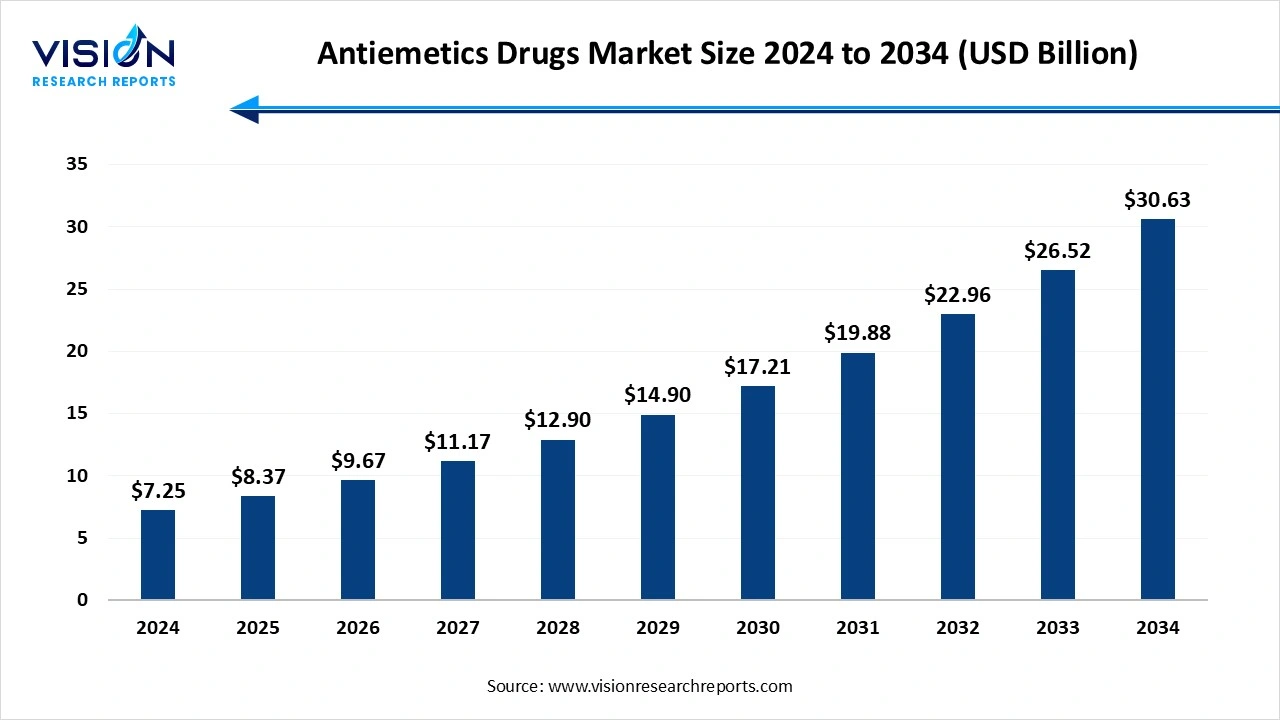
The antiemetics drugs market is a critical segment within the pharmaceutical industry, dedicated to addressing the challenges of nausea and vomiting, prevalent symptoms associated with various medical conditions and treatments. This overview aims to provide a comprehensive understanding of the antiemetics drugs market, covering key aspects such as market definition, current landscape, and future prospects.
The growth of the antiemetic drugs market is primarily driven by the increasing prevalence of cancer and the widespread use of chemotherapy and radiation therapies, which often cause severe nausea and vomiting. Rising cases of gastrointestinal disorders, motion sickness, and post-operative nausea are also contributing to market expansion. The growing geriatric population, which is more susceptible to chronic illnesses requiring antiemetic treatment, further fuels demand. Moreover, technological advancements in drug delivery systems such as orally disintegrating tablets, intravenous formulations, and transdermal patches—are improving treatment efficacy and patient adherence.
In addition, expanding healthcare access and awareness in emerging economies are creating new growth opportunities for antiemetic drug manufacturers. Ongoing research and development activities focusing on novel drug combinations and improved receptor-targeting mechanisms are enhancing product effectiveness and safety. Supportive government initiatives and the increasing availability of over-the-counter antiemetic medications also contribute to market growth. However, despite these positive trends, factors like adverse drug reactions and the high cost of branded formulations could pose challenges to widespread adoption.
| Report Coverage | Details |
| Market Size in 2024 | USD 7.25 Billion |
| Revenue Forecast by 2034 | USD 30.63 Billion |
| Growth rate from 2025 to 2034 | CAGR of 15.5% |
| Base Year | 2024 |
| Forecast Period | 2025 to 2034 |
| Regions | North America, Europe, Asia Pacific, Latin America, Middle East & Africa |
| Companies Covered | Pfizer Inc., Cipla Inc., Merck KGaA, Eagle Pharmaceuticals, Inc., Johnson & Johnson Services, Inc., GSK plc, Astellas Pharma Inc., Glenmark Pharmaceuticals Ltd., Viatris Inc., and Baxter. |
The antiemetic drugs market faces several challenges that may hinder its growth trajectory. One of the primary issues is the occurrence of side effects such as dizziness, constipation, and sedation, which can reduce patient adherence to treatment. Additionally, the growing availability of low-cost generic drugs has intensified market competition, putting pressure on profit margins for major pharmaceutical companies. The expiration of key patents has also led to a surge in generic alternatives, limiting revenue potential for branded drug manufacturers.
Another major challenge is the high cost associated with developing novel antiemetic formulations and conducting extensive clinical trials required for regulatory approval. Limited awareness and access to advanced antiemetic treatments in low- and middle-income countries further restrict market penetration. Moreover, variability in patient response due to genetic differences and drug interactions complicates treatment protocols, emphasizing the need for more personalized and targeted therapies.
North America led the market with the largest market share in 2024. The region's leadership is bolstered by the presence of key players such as Pfizer and GSK plc, contributing to a higher revenue share. Additionally, the ongoing approvals for antiemetic drugs in North America are expected to fuel further regional expansion. Notably, a May 2022 article from the Canadian Institutes of Health Research highlighted the approval of Ondansetron, a 5-HT3 antagonist, in Canada for use as an antiemetic in managing nausea and vomiting associated with chemotherapy and post-operation scenarios.
The Asia Pacific market is poised for significant growth, projected to achieve a noteworthy CAGR from 2025 to 2034. This trajectory is supported by the increasing incidences of cancer and gastroenteritis across the region, coupled with the expanding availability of various antiemetic medications. A November 2022 study published by the National Library of Medicine revealed a projected 12.8% increase in cancer cases in India within the five-year period from 2020 to 2025. Consequently, the escalating incidences of cancer, coupled with the growing prevalence of chemotherapy, are anticipated to be key drivers of regional growth throughout the forecast period.
In 2024, the serotonin-receptor antagonists segment secured the largest market share at 30% and it is poised to experience the swiftest growth throughout the forecast period. This segment encompasses drugs such as Ondansetron (Zofran), Dolasetron (Anzemet), and Granisetron (Kytril), available in both injection and oral pill formulations. The notable market share and anticipated growth of this segment can be attributed to the increasing utilization of serotonin-receptor antagonist drugs to mitigate nausea and vomiting associated with chemotherapy, radiation therapy, and anesthesia. This trend is further accentuated by the escalating global incidence of cancer.
The dopamine receptor antagonist drugs segment held the second-largest market share, featuring drugs like Barhemsys, Inapsine, Haldol, Reglan, Gimoti, and Thorazine. The growth in this segment is attributed to the mounting approvals received by these drugs from regulatory authorities. For instance, in February 2020, BARHEMSYS, an antiemetic drug, obtained FDA approval for the prevention or treatment of postoperative nausea and vomiting.
The chemotherapy segment contributed the largest market share in 2024. The heightened revenue share of this segment can be attributed to the increasing utilization of antiemetic drugs for managing nausea and vomiting associated with chemotherapy, coupled with a surge in product launches within this domain. Notably, in May 2018, in Brazil, Helsinn, a Swiss pharmaceutical company, in collaboration with Mundipharma, introduced the oral hard capsule AKYNZEO, designed to address nausea and vomiting induced by both acute and delayed phases of chemotherapy.
The postoperative surgery segment is forecasted to exhibit the fastest CAGR from 2025 to 2034. The anticipated growth in this segment is fueled by the growing adoption of antiemetic drugs to mitigate postoperative vomiting and nausea. Additionally, the prevalence of adverse effects, such as nausea and vomiting due to anesthesia, is expected to contribute to segmental growth throughout the forecast period. As highlighted in a November 2020 article by the Association of Anesthetists, approximately 30% of the general surgical population and about 80% of high-risk patients experience postoperative vomiting and nausea.
The retail pharmacies segment asserted its dominance in the market, securing a substantial revenue share in 2024. The growth of this segment is fueled by the convenience and product availability offered by retail pharmacies. Additionally, the widespread presence of major retail pharmacy chains such as CVS Pharmacy, Walgreens Boots Alliance, and Rite Aid on a global scale is expected to drive the demand for these medications throughout the forecast period.
Conversely, the other segment, encompassing the procurement of drugs through online platforms or e-commerce, is anticipated to exhibit the highest Compound Annual Growth Rate (CAGR) over the forecast period. The expansion of this segment can be attributed to the increasing penetration of smartphones and the internet worldwide, a growing awareness of online pharmacies, and the industry's increasing emphasis on fortifying their online distribution networks. According to a study published in Frontiers in December 2022, approximately 92.8% of respondents were aware that they could purchase medicines online.
By Drug Type
By Application
By End-use
By Region
Chapter 1. Introduction
1.1. Research Objective
1.2. Scope of the Study
1.3. Definition
Chapter 2. Research Methodology
2.1. Research Approach
2.2. Data Sources
2.3. Assumptions & Limitations
Chapter 3. Executive Summary
3.1. Market Snapshot
Chapter 4. Market Variables and Scope
4.1. Introduction
4.2. Market Classification and Scope
4.3. Industry Value Chain Analysis
4.3.1. Raw Material Procurement Analysis
4.3.2. Sales and Distribution Drug Type Analysis
4.3.3. Downstream Buyer Analysis
Chapter 5. COVID 19 Impact on Antiemetics Drugs Market
5.1. COVID-19 Landscape: Antiemetics Drugs Industry Impact
5.2. COVID 19 - Impact Assessment for the Industry
5.3. COVID 19 Impact: Global Major Government Policy
5.4. Market Trends and Opportunities in the COVID-19 Landscape
Chapter 6. Market Dynamics Analysis and Trends
6.1. Market Dynamics
6.1.1. Market Drivers
6.1.2. Market Restraints
6.1.3. Market Opportunities
6.2. Porter’s Five Forces Analysis
6.2.1. Bargaining power of suppliers
6.2.2. Bargaining power of buyers
6.2.3. Threat of substitute
6.2.4. Threat of new entrants
6.2.5. Degree of competition
Chapter 7. Competitive Landscape
7.1.1. Company Market Share/Positioning Analysis
7.1.2. Key Strategies Adopted by Players
7.1.3. Vendor Landscape
7.1.3.1. List of Suppliers
7.1.3.2. List of Buyers
Chapter 8. Global Antiemetics Drugs Market, By Drug Type
8.1. Antiemetics Drugs Market, by Drug Type,
8.1.1 Serotonin-receptor Antagonists
8.1.1.1. Market Revenue and Forecast
8.1.2. Anticholinergics
8.1.2.1. Market Revenue and Forecast
8.1.3. Dopamine Receptor Antagonists
8.1.3.1. Market Revenue and Forecast
8.1.4. Neurokinin Receptor Antagonists
8.1.4.1. Market Revenue and Forecast
8.1.5. Others (Antihistamines, Cannabinoids)
8.1.5.1. Market Revenue and Forecast
Chapter 9. Global Antiemetics Drugs Market, By Application
9.1. Antiemetics Drugs Market, by Application,
9.1.1. Chemotherapy
9.1.1.1. Market Revenue and Forecast
9.1.2. Gastroenteritis
9.1.2.1. Market Revenue and Forecast
9.1.3. Post Operative Surgery
9.1.3.1. Market Revenue and Forecast
9.1.4. Others
9.1.4.1. Market Revenue and Forecast
Chapter 10. Global Antiemetics Drugs Market, By End-use
10.1. Antiemetics Drugs Market, by End-use,
10.1.1. Hospital & Clinics
10.1.1.1. Market Revenue and Forecast
10.1.2. Retail Pharmacy
10.1.2.1. Market Revenue and Forecast
10.1.3. Others
10.1.3.1. Market Revenue and Forecast
Chapter 11. Global Antiemetics Drugs Market, Regional Estimates and Trend Forecast
11.1. North America
11.1.1. Market Revenue and Forecast, by Drug Type
11.1.2. Market Revenue and Forecast, by Application
11.1.3. Market Revenue and Forecast, by End-use
11.1.4. U.S.
11.1.4.1. Market Revenue and Forecast, by Drug Type
11.1.4.2. Market Revenue and Forecast, by Application
11.1.4.3. Market Revenue and Forecast, by End-use
11.1.5. Rest of North America
11.1.5.1. Market Revenue and Forecast, by Drug Type
11.1.5.2. Market Revenue and Forecast, by Application
11.1.5.3. Market Revenue and Forecast, by End-use
11.2. Europe
11.2.1. Market Revenue and Forecast, by Drug Type
11.2.2. Market Revenue and Forecast, by Application
11.2.3. Market Revenue and Forecast, by End-use
11.2.4. UK
11.2.4.1. Market Revenue and Forecast, by Drug Type
11.2.4.2. Market Revenue and Forecast, by Application
11.2.4.3. Market Revenue and Forecast, by End-use
11.2.5. Germany
11.2.5.1. Market Revenue and Forecast, by Drug Type
11.2.5.2. Market Revenue and Forecast, by Application
11.2.5.3. Market Revenue and Forecast, by End-use
11.2.6. France
11.2.6.1. Market Revenue and Forecast, by Drug Type
11.2.6.2. Market Revenue and Forecast, by Application
11.2.6.3. Market Revenue and Forecast, by End-use
11.2.7. Rest of Europe
11.2.7.1. Market Revenue and Forecast, by Drug Type
11.2.7.2. Market Revenue and Forecast, by Application
11.2.7.3. Market Revenue and Forecast, by End-use
11.3. APAC
11.3.1. Market Revenue and Forecast, by Drug Type
11.3.2. Market Revenue and Forecast, by Application
11.3.3. Market Revenue and Forecast, by End-use
11.3.4. India
11.3.4.1. Market Revenue and Forecast, by Drug Type
11.3.4.2. Market Revenue and Forecast, by Application
11.3.4.3. Market Revenue and Forecast, by End-use
11.3.5. China
11.3.5.1. Market Revenue and Forecast, by Drug Type
11.3.5.2. Market Revenue and Forecast, by Application
11.3.5.3. Market Revenue and Forecast, by End-use
11.3.6. Japan
11.3.6.1. Market Revenue and Forecast, by Drug Type
11.3.6.2. Market Revenue and Forecast, by Application
11.3.6.3. Market Revenue and Forecast, by End-use
11.3.7. Rest of APAC
11.3.7.1. Market Revenue and Forecast, by Drug Type
11.3.7.2. Market Revenue and Forecast, by Application
11.3.7.3. Market Revenue and Forecast, by End-use
11.4. MEA
11.4.1. Market Revenue and Forecast, by Drug Type
11.4.2. Market Revenue and Forecast, by Application
11.4.3. Market Revenue and Forecast, by End-use
11.4.4. GCC
11.4.4.1. Market Revenue and Forecast, by Drug Type
11.4.4.2. Market Revenue and Forecast, by Application
11.4.4.3. Market Revenue and Forecast, by End-use
11.4.5. North Africa
11.4.5.1. Market Revenue and Forecast, by Drug Type
11.4.5.2. Market Revenue and Forecast, by Application
11.4.5.3. Market Revenue and Forecast, by End-use
11.4.6. South Africa
11.4.6.1. Market Revenue and Forecast, by Drug Type
11.4.6.2. Market Revenue and Forecast, by Application
11.4.6.3. Market Revenue and Forecast, by End-use
11.4.7. Rest of MEA
11.4.7.1. Market Revenue and Forecast, by Drug Type
11.4.7.2. Market Revenue and Forecast, by Application
11.4.7.3. Market Revenue and Forecast, by End-use
11.5. Latin America
11.5.1. Market Revenue and Forecast, by Drug Type
11.5.2. Market Revenue and Forecast, by Application
11.5.3. Market Revenue and Forecast, by End-use
11.5.4. Brazil
11.5.4.1. Market Revenue and Forecast, by Drug Type
11.5.4.2. Market Revenue and Forecast, by Application
11.5.4.3. Market Revenue and Forecast, by End-use
11.5.5. Rest of LATAM
11.5.5.1. Market Revenue and Forecast, by Drug Type
11.5.5.2. Market Revenue and Forecast, by Application
11.5.5.3. Market Revenue and Forecast, by End-use
Chapter 12. Company Profiles
12.1. Pfizer Inc.
12.1.1. Company Overview
12.1.2. Product Offerings
12.1.3. Financial Performance
12.1.4. Recent Initiatives
12.2. Cipla Inc.
12.2.1. Company Overview
12.2.2. Product Offerings
12.2.3. Financial Performance
12.2.4. Recent Initiatives
12.3. Merck KGaA.
12.3.1. Company Overview
12.3.2. Product Offerings
12.3.3. Financial Performance
12.3.4. Recent Initiatives
12.4. Eagle Pharmaceuticals, Inc.
12.4.1. Company Overview
12.4.2. Product Offerings
12.4.3. Financial Performance
12.4.4. Recent Initiatives
12.5. Johnson & Johnson Services, Inc.
12.5.1. Company Overview
12.5.2. Product Offerings
12.5.3. Financial Performance
12.5.4. Recent Initiatives
12.6. GSK plc.
12.6.1. Company Overview
12.6.2. Product Offerings
12.6.3. Financial Performance
12.6.4. Recent Initiatives
12.7. Astellas Pharma Inc.
12.7.1. Company Overview
12.7.2. Product Offerings
12.7.3. Financial Performance
12.7.4. Recent Initiatives
12.8. GLENMARK PHARMACEUTICALS LTD.
12.8.1. Company Overview
12.8.2. Product Offerings
12.8.3. Financial Performance
12.8.4. Recent Initiatives
12.9. Viatris Inc.
12.9.1. Company Overview
12.9.2. Product Offerings
12.9.3. Financial Performance
12.9.4. Recent Initiatives
12.10. Baxter
12.10.1. Company Overview
12.10.2. Product Offerings
12.10.3. Financial Performance
12.10.4. Recent Initiatives
Chapter 13. Research Methodology
13.1. Primary Research
13.2. Secondary Research
13.3. Assumptions
Chapter 14. Appendix
14.1. About Us
14.2. Glossary of Terms
 Cross-segment Market Size and Analysis for
Mentioned Segments
Additional Company Profiles (Upto 5 With No Cost)
Additional Countries (Apart From Mentioned Countries)
Country/Region-specific Report
Go To Market Strategy
Region Specific Market DynamicsRegion Level Market Share Import Export AnalysisProduction AnalysisOthers
Cross-segment Market Size and Analysis for
Mentioned Segments
Additional Company Profiles (Upto 5 With No Cost)
Additional Countries (Apart From Mentioned Countries)
Country/Region-specific Report
Go To Market Strategy
Region Specific Market DynamicsRegion Level Market Share Import Export AnalysisProduction AnalysisOthers