
Germany Pharmaceutical Market Size & Share Industry Report, 2034
The Germany pharmaceutical market size was reached at around USD 95.13 billion in 2024 and it is projected to hit around USD 160.96 billion by 2034, growing at a CAGR of 5.40% from 2025 to 2034.
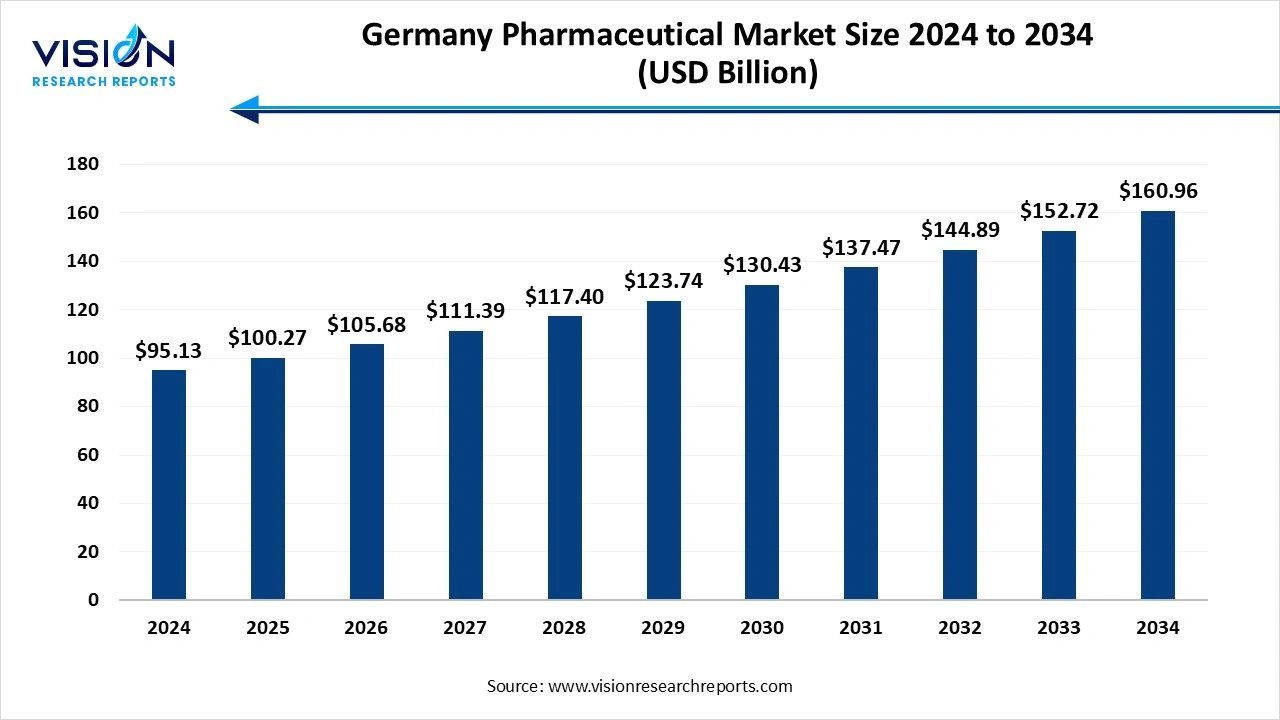
Germany’s pharmaceutical market stands as one of the largest and most advanced in Europe, driven by a robust healthcare infrastructure, strong regulatory frameworks, and a significant focus on innovation and research. The country benefits from a mature domestic pharmaceutical industry complemented by a high level of public and private healthcare expenditure, ensuring steady demand for both branded and generic medicines. Germany also serves as a key hub for pharmaceutical exports within the European Union and globally, leveraging its strong manufacturing capabilities and strategic central location.
The growth of the Germany pharmaceutical market is primarily fueled by its aging population and the rising prevalence of chronic diseases such as diabetes, cancer, and cardiovascular disorders. With one of the highest proportions of elderly citizens in Europe, the demand for advanced medical treatments and long-term care is steadily increasing. This demographic trend, coupled with high public healthcare spending and comprehensive insurance coverage, continues to drive consistent consumption of pharmaceutical products across the country.
Another key growth factor is Germany’s role as a global leader in pharmaceutical research and manufacturing. The presence of major multinational corporations, a skilled workforce, and advanced research institutions creates an environment conducive to innovation and production. Germany also benefits from its integration into the European regulatory framework, which facilitates easier market access and export opportunities.
One of the most prominent trends in the Germany pharmaceutical market is the increasing integration of digital health technologies and data-driven solutions. The adoption of electronic health records (EHRs), telemedicine, and AI-based diagnostic tools is transforming patient care and streamlining clinical processes. Additionally, the use of real-world evidence (RWE) in drug development and regulatory approval is gaining traction, allowing companies to better assess treatment outcomes and personalize therapies.
Another significant trend is the shift toward biopharmaceuticals and personalized medicine. Biologic drugs, especially in therapeutic areas like oncology, immunology, and rare diseases, are witnessing strong demand due to their targeted effectiveness. German pharmaceutical firms are increasingly investing in gene and cell therapy research, supported by partnerships with academic institutions and biotech firms. This trend is further amplified by the growing focus on sustainability and green manufacturing practices, where companies are aiming to reduce environmental impact while maintaining high production standards.
One of the key challenges facing the Germany pharmaceutical market is the increasing pressure on drug pricing and reimbursement policies. The government has implemented stringent cost-containment measures through health insurance funds and the AMNOG (Act on the Reform of the Market for Medicinal Products) process, which evaluates the added benefit of new drugs before allowing premium pricing. While these policies aim to control healthcare spending, they also create a complex and lengthy negotiation process for pharmaceutical companies, potentially delaying market access and affecting profit margins.
Another major challenge is the growing regulatory and compliance burden, especially in areas related to data protection, clinical trials, and pharmacovigilance. The implementation of the EU Clinical Trials Regulation and GDPR has increased administrative responsibilities and operational costs for pharmaceutical firms. Additionally, supply chain disruptions, exacerbated by geopolitical tensions and global crises, have highlighted vulnerabilities in drug manufacturing and distribution.
The conventional drugs (small molecules) led the market, accounting for a revenue share of 55% in 2024. cost-effectiveness, and broad application in treating a variety of acute and chronic conditions. These drugs are widely prescribed for common diseases such as hypertension, diabetes, infectious diseases, and pain management. The consistent demand for generics and over-the-counter medications further reinforces the strong market share held by conventional drugs. Germany’s robust manufacturing capabilities and regulatory support for generic substitution have also enabled the continued growth of this segment, particularly among domestic pharmaceutical companies.
The biologics and biosimilars (large molecules) are projected to witness significant growth throughout the forecast period. Biologics, including monoclonal antibodies, vaccines, and gene therapies, are increasingly used to treat complex and chronic diseases such as cancer, autoimmune disorders, and rare genetic conditions. The German market has seen heightened investment in biopharmaceutical research, with leading pharmaceutical and biotech firms engaging in innovative product development and strategic partnerships.
The branded segment held the largest share of the Germany pharmaceutical industry, capturing 67% of the total revenue in 2024. These products are often the result of extensive research and development efforts, offering advanced treatment options for complex and chronic diseases such as cancer, cardiovascular disorders, and autoimmune conditions. German pharmaceutical companies and multinational corporations heavily invest in the development and marketing of branded drugs, leveraging Germany’s strong regulatory environment and well-established healthcare infrastructure to ensure broad patient access.
The generic segment is expected to register the highest growth rate during the forecast period. Generics provide bioequivalent versions of branded drugs once patent protections expire, enabling greater accessibility and affordability without compromising on quality or efficacy. The country’s healthcare system actively promotes generic substitution, supported by streamlined regulatory approvals and incentives for physicians and pharmacists to prescribe generics. This approach not only helps to reduce overall healthcare expenditures but also ensures the sustainability of the pharmaceutical supply chain.
The prescription segment led the market, accounting for 87% of the total revenue in 2024.
Prescription drugs constitute the largest segment, primarily due to the country’s advanced medical infrastructure and high standards of clinical care. These medications require a healthcare professional’s authorization because they are used to treat more complex, chronic, or severe health conditions, including cardiovascular diseases, cancer, diabetes, and autoimmune disorders. The prescription segment is driven by continuous innovations in drug development, stringent regulatory approvals, and robust insurance coverage, which collectively ensure patient access to a wide range of therapeutic options.
The conversely, the over-the-counter segment is steadily growing, reflecting increasing consumer awareness and a shift toward self-medication for minor ailments and preventive healthcare. OTC drugs include medications for common conditions such as colds, allergies, digestive issues, and pain relief, and are easily accessible without a prescription. The rise in health-conscious consumers, coupled with supportive government initiatives promoting responsible self-care, has bolstered demand for OTC products.
The cancer segment emerged as the leading therapeutic area, contributing 19% in 2024, to the overall market revenue. Cancer treatments represent a critical area of focus for pharmaceutical companies, driven by continuous advancements in oncology therapies including targeted drugs, immunotherapies, and personalized medicine. Germany’s well-established healthcare infrastructure supports comprehensive cancer care, facilitating early diagnosis, innovative treatment options, and access to clinical trials. The rising incidence of various cancers, coupled with an aging population, sustains strong demand for effective pharmaceutical interventions.
The obesity, another growing health concern in Germany, is increasingly recognized for its role in contributing to various chronic diseases such as diabetes, cardiovascular disorders, and metabolic syndrome. The pharmaceutical market is responding to this challenge by focusing on the development and availability of medications that aid in weight management and the treatment of obesity-related complications. Growing public health awareness campaigns and government initiatives targeting lifestyle modification complement pharmaceutical interventions to address this epidemic.
The oral segment led the market, capturing a revenue share of 58% in 2024. Tablets, capsules, and liquid formulations dominate this segment, serving a broad spectrum of therapeutic areas including cardiovascular diseases, diabetes, infections, and chronic conditions. The ease of self-administration and well-established manufacturing processes make oral drugs highly accessible to patients, which supports their dominant position in the market.
The parenteral administration, which includes injections and infusions, plays a critical role in delivering drugs that require rapid onset of action, precise dosing, or cannot be effectively absorbed through the gastrointestinal tract. This route is especially important for biologics, vaccines, oncology treatments, and acute care medications. The parenteral segment in Germany is expanding, driven by the increasing adoption of advanced therapies such as monoclonal antibodies and gene therapies that necessitate intravenous or subcutaneous delivery. Hospitals, clinics, and specialized care settings form the primary administration points for these drugs, supported by a strong healthcare infrastructure.
The adult segment held the largest share of the market, accounting for 63% of the total revenue. Adults represent a large and active patient base, often managing chronic illnesses that require long-term medication. Pharmaceutical companies focus on developing treatments that improve quality of life and adherence, including fixed-dose combinations and novel formulations tailored to adult patients. Preventive healthcare and wellness products also contribute to this segment’s steady growth, supported by increasing health awareness and routine medical check-ups.
The geriatric population, which is rapidly expanding in Germany due to rising life expectancy and demographic shifts, presents a critical driver for pharmaceutical demand. Older adults typically require complex care involving multiple medications for age-related conditions such as arthritis, osteoporosis, neurodegenerative diseases, and cardiovascular ailments. This group often faces challenges related to polypharmacy, drug interactions, and altered pharmacokinetics, prompting the need for specialized drug formulations and safer therapeutic options. The pharmaceutical market in Germany is responding by emphasizing geriatric-friendly medicines, including easier-to-swallow dosage forms and sustained-release products.
The hospital pharmacy segment emerged as the market leader, contributing 54% to the total revenue in 2024. These pharmacies handle complex therapies, including high-cost biologics, oncology drugs, and specialized treatments that require professional administration and monitoring. The integration of hospital pharmacies with healthcare providers facilitates efficient medication management, adherence to treatment protocols, and timely availability of critical drugs.
The retail pharmacies form the backbone of pharmaceutical distribution in Germany, offering broad access to prescription and over-the-counter medicines to the general population. These pharmacies are widespread, highly regulated, and often serve as the first point of contact for patients seeking healthcare advice and medication. Retail pharmacies play a significant role in promoting patient education, adherence, and preventive care through personalized services. The evolving landscape includes the growing adoption of digital pharmacy services and e-commerce platforms, enhancing convenience and expanding the reach of pharmaceutical products.
By Molecule Type
By Product
By Type
By Disease
By Route of Administration
By Age Group
By Distribution Channel
 Cross-segment Market Size and Analysis for
Mentioned Segments
Additional Company Profiles (Upto 5 With No Cost)
Additional Countries (Apart From Mentioned Countries)
Country/Region-specific Report
Go To Market Strategy
Region Specific Market DynamicsRegion Level Market Share Import Export AnalysisProduction AnalysisOthers
Cross-segment Market Size and Analysis for
Mentioned Segments
Additional Company Profiles (Upto 5 With No Cost)
Additional Countries (Apart From Mentioned Countries)
Country/Region-specific Report
Go To Market Strategy
Region Specific Market DynamicsRegion Level Market Share Import Export AnalysisProduction AnalysisOthers