
Disease Management Apps Market Size, Growth, Trends | Report 2023-2032
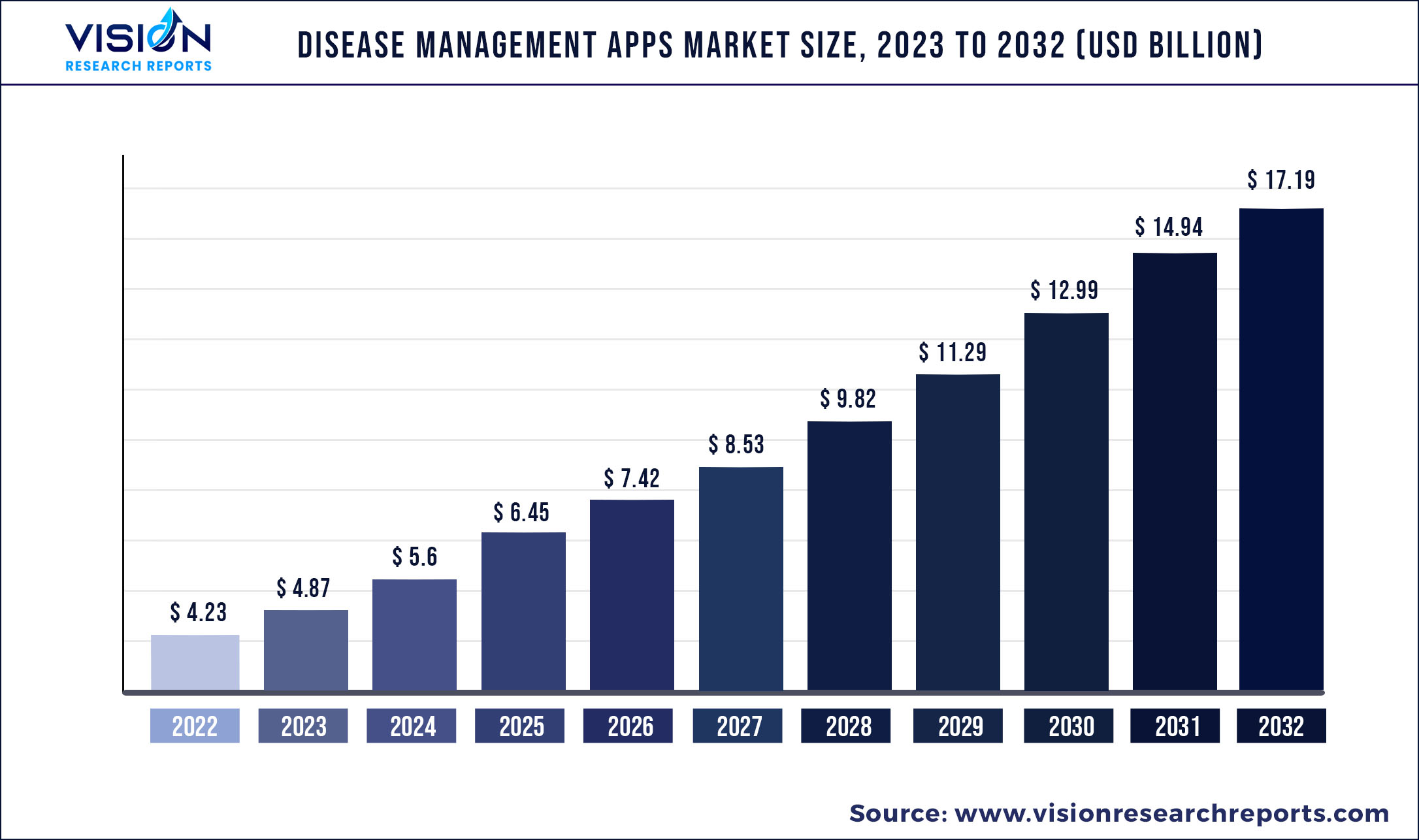
The global disease management apps market was surpassed at USD 4.23 billion in 2022 and is expected to hit around USD 17.19 billion by 2032, growing at a CAGR of 15.04% from 2023 to 2032.
Key Pointers
Report Scope of the Disease Management Apps Market
| Report Coverage | Details |
| Market Size in 2022 | USD 4.23 billion |
| Revenue Forecast by 2032 | USD 17.19 billion |
| Growth rate from 2023 to 2032 | CAGR of 15.04% |
| Base Year | 2022 |
| Forecast Period | 2023 to 2032 |
| Regions Covered | North America, Europe, Asia Pacific, Latin America, Middle East & Africa |
| Companies Covered | Healthy.io, Medicounty, MYFITNESSPAL, NOOM INC., FITBIT, INC., AZUMIO INC., Sleep Cycle, other |
The disease management apps market is expected to grow at a significant rate owing to a growing trend of individuals prioritizing a healthy lifestyle. The widespread use of tablets, wearable technology, and smartphones, along with the existence of mobile apps, is also driving the market growth. The rising public consciousness about the health risks associated with poor nutrition is boosting demand for apps that help manage lifestyle diseases. A study by the World Economic Forum, published in September 2020, found that the market for fitness apps has experienced a growth of over 45% globally in terms of downloads and is expected to continue to grow as more individuals adopt smart devices, smart wearables, and smartphones. The COVID-19 pandemic resulted in lockdowns and social distancing measures, resulting in a shift from traditional healthcare settings to virtual healthcare, which boosted the demand for these apps. The pandemic further accelerated the adoption of digital health solutions and is expected to drive the growth of the disease management apps market in the coming years.
Disease management apps are software applications designed to help individuals manage their chronic illnesses and conditions. These apps typically provide tools and resources to track symptoms, manage medication, communicate with healthcare providers, and access educational information about the disease. They also often feature reminders, goal-setting and tracking, and access to community resources or support groups. The aim is to help patients better understand and manage their condition, improve health outcomes, and promote self-care. The consumer focus is shifting toward the management of chronic diseases such as diabetes, heart disease, and mental health conditions. Healthcare providers are increasingly adopting and integrating disease management apps into their practices to improve patient outcomes and reduce costs. These trends highlight the growing importance of digital health solutions in the management of chronic diseases and the drive to provide more personalized, convenient, and effective care to patients.
The integration of telemedicine into disease management apps is becoming increasingly popular, allowing patients to connect with healthcare providers remotely. Companies are incorporating AI and machine learning into their disease management apps to provide personalized recommendations and improve health outcomes, they are also integrating wearable technology, such as fitness trackers and smartwatches, into disease management apps to provide a more comprehensive view of a patient's health. For instance, in December 2020, Otsuka Pharmaceutical, a Japanese pharmaceutical company, acquired Proteus Digital Health, a digital health company. This acquisition will enable Otsuka Pharmaceutical to integrate Proteus' digital medicine technology into its existing portfolio of psychiatric and neurological drugs and provide patients with a more comprehensive and personalized approach to their health management. The acquisition will also enhance its capabilities in digital health and expand its reach in the growing market for connected health solutions.
Disease Management Apps Market Segmentations:
| By Platform Type | By Device | By Indication |
|
iOS Android Others |
Smartphones Tablets Wearables |
Chronic Diseases Cardiovascular diseases Diabetes Respiratory diseases Others Inflammatory conditions Mental health conditions Other conditions |
Chapter 1. Introduction
1.1. Research Objective
1.2. Scope of the Study
1.3. Definition
Chapter 2. Research Methodology
2.1. Research Approach
2.2. Data Sources
2.3. Assumptions & Limitations
Chapter 3. Executive Summary
3.1. Market Snapshot
Chapter 4. Market Variables and Scope
4.1. Introduction
4.2. Market Classification and Scope
4.3. Industry Value Chain Analysis
4.3.1. Raw Material Procurement Analysis
4.3.2. Sales and Distribution Platform Type Analysis
4.3.3. Downstream Buyer Analysis
Chapter 5. COVID 19 Impact on Disease Management Apps Market
5.1. COVID-19 Landscape: Disease Management Apps Industry Impact
5.2. COVID 19 - Impact Assessment for the Industry
5.3. COVID 19 Impact: Global Major Government Policy
5.4. Market Trends and Opportunities in the COVID-19 Landscape
Chapter 6. Market Dynamics Analysis and Trends
6.1. Market Dynamics
6.1.1. Market Drivers
6.1.2. Market Restraints
6.1.3. Market Opportunities
6.2. Porter’s Five Forces Analysis
6.2.1. Bargaining power of suppliers
6.2.2. Bargaining power of buyers
6.2.3. Threat of substitute
6.2.4. Threat of new entrants
6.2.5. Degree of competition
Chapter 7. Competitive Landscape
7.1.1. Company Market Share/Positioning Analysis
7.1.2. Key Strategies Adopted by Players
7.1.3. Vendor Landscape
7.1.3.1. List of Suppliers
7.1.3.2. List of Buyers
Chapter 8. Global Disease Management Apps Market, By Platform Type
8.1. Disease Management Apps Market, by Platform Type, 2023-2032
8.1.1 iOS
8.1.1.1. Market Revenue and Forecast (2020-2032)
8.1.2. Android
8.1.2.1. Market Revenue and Forecast (2020-2032)
8.1.3. Others
8.1.3.1. Market Revenue and Forecast (2020-2032)
Chapter 9. Global Disease Management Apps Market, By Device
9.1. Disease Management Apps Market, by Device, 2023-2032
9.1.1. Smartphones
9.1.1.1. Market Revenue and Forecast (2020-2032)
9.1.2. Tablets
9.1.2.1. Market Revenue and Forecast (2020-2032)
9.1.3. Wearables
9.1.3.1. Market Revenue and Forecast (2020-2032)
Chapter 10. Global Disease Management Apps Market, By Indication
10.1. Disease Management Apps Market, by Indication, 2023-2032
10.1.1. Chronic Diseases
10.1.1.1. Market Revenue and Forecast (2020-2032)
10.1.2. Cardiovascular diseases
10.1.2.1. Market Revenue and Forecast (2020-2032)
10.1.3. Diabetes
10.1.3.1. Market Revenue and Forecast (2020-2032)
10.1.4. Respiratory diseases
10.1.4.1. Market Revenue and Forecast (2020-2032)
10.1.5. Others
10.1.5.1. Market Revenue and Forecast (2020-2032)
10.1.6. Inflammatory conditions
10.1.6.1. Market Revenue and Forecast (2020-2032)
10.1.7. Mental health conditions
10.1.7.1. Market Revenue and Forecast (2020-2032)
10.1.8. Other conditions
10.1.8.1. Market Revenue and Forecast (2020-2032)
Chapter 11. Global Disease Management Apps Market, Regional Estimates and Trend Forecast
11.1. North America
11.1.1. Market Revenue and Forecast, by Platform Type (2020-2032)
11.1.2. Market Revenue and Forecast, by Device (2020-2032)
11.1.3. Market Revenue and Forecast, by Indication (2020-2032)
11.1.4. U.S.
11.1.4.1. Market Revenue and Forecast, by Platform Type (2020-2032)
11.1.4.2. Market Revenue and Forecast, by Device (2020-2032)
11.1.4.3. Market Revenue and Forecast, by Indication (2020-2032)
11.1.5. Rest of North America
11.1.5.1. Market Revenue and Forecast, by Platform Type (2020-2032)
11.1.5.2. Market Revenue and Forecast, by Device (2020-2032)
11.1.5.3. Market Revenue and Forecast, by Indication (2020-2032)
11.2. Europe
11.2.1. Market Revenue and Forecast, by Platform Type (2020-2032)
11.2.2. Market Revenue and Forecast, by Device (2020-2032)
11.2.3. Market Revenue and Forecast, by Indication (2020-2032)
11.2.4. UK
11.2.4.1. Market Revenue and Forecast, by Platform Type (2020-2032)
11.2.4.2. Market Revenue and Forecast, by Device (2020-2032)
11.2.4.3. Market Revenue and Forecast, by Indication (2020-2032)
11.2.5. Germany
11.2.5.1. Market Revenue and Forecast, by Platform Type (2020-2032)
11.2.5.2. Market Revenue and Forecast, by Device (2020-2032)
11.2.5.3. Market Revenue and Forecast, by Indication (2020-2032)
11.2.6. France
11.2.6.1. Market Revenue and Forecast, by Platform Type (2020-2032)
11.2.6.2. Market Revenue and Forecast, by Device (2020-2032)
11.2.6.3. Market Revenue and Forecast, by Indication (2020-2032)
11.2.7. Rest of Europe
11.2.7.1. Market Revenue and Forecast, by Platform Type (2020-2032)
11.2.7.2. Market Revenue and Forecast, by Device (2020-2032)
11.2.7.3. Market Revenue and Forecast, by Indication (2020-2032)
11.3. APAC
11.3.1. Market Revenue and Forecast, by Platform Type (2020-2032)
11.3.2. Market Revenue and Forecast, by Device (2020-2032)
11.3.3. Market Revenue and Forecast, by Indication (2020-2032)
11.3.4. India
11.3.4.1. Market Revenue and Forecast, by Platform Type (2020-2032)
11.3.4.2. Market Revenue and Forecast, by Device (2020-2032)
11.3.4.3. Market Revenue and Forecast, by Indication (2020-2032)
11.3.5. China
11.3.5.1. Market Revenue and Forecast, by Platform Type (2020-2032)
11.3.5.2. Market Revenue and Forecast, by Device (2020-2032)
11.3.5.3. Market Revenue and Forecast, by Indication (2020-2032)
11.3.6. Japan
11.3.6.1. Market Revenue and Forecast, by Platform Type (2020-2032)
11.3.6.2. Market Revenue and Forecast, by Device (2020-2032)
11.3.6.3. Market Revenue and Forecast, by Indication (2020-2032)
11.3.7. Rest of APAC
11.3.7.1. Market Revenue and Forecast, by Platform Type (2020-2032)
11.3.7.2. Market Revenue and Forecast, by Device (2020-2032)
11.3.7.3. Market Revenue and Forecast, by Indication (2020-2032)
11.4. MEA
11.4.1. Market Revenue and Forecast, by Platform Type (2020-2032)
11.4.2. Market Revenue and Forecast, by Device (2020-2032)
11.4.3. Market Revenue and Forecast, by Indication (2020-2032)
11.4.4. GCC
11.4.4.1. Market Revenue and Forecast, by Platform Type (2020-2032)
11.4.4.2. Market Revenue and Forecast, by Device (2020-2032)
11.4.4.3. Market Revenue and Forecast, by Indication (2020-2032)
11.4.5. North Africa
11.4.5.1. Market Revenue and Forecast, by Platform Type (2020-2032)
11.4.5.2. Market Revenue and Forecast, by Device (2020-2032)
11.4.5.3. Market Revenue and Forecast, by Indication (2020-2032)
11.4.6. South Africa
11.4.6.1. Market Revenue and Forecast, by Platform Type (2020-2032)
11.4.6.2. Market Revenue and Forecast, by Device (2020-2032)
11.4.6.3. Market Revenue and Forecast, by Indication (2020-2032)
11.4.7. Rest of MEA
11.4.7.1. Market Revenue and Forecast, by Platform Type (2020-2032)
11.4.7.2. Market Revenue and Forecast, by Device (2020-2032)
11.4.7.3. Market Revenue and Forecast, by Indication (2020-2032)
11.5. Latin America
11.5.1. Market Revenue and Forecast, by Platform Type (2020-2032)
11.5.2. Market Revenue and Forecast, by Device (2020-2032)
11.5.3. Market Revenue and Forecast, by Indication (2020-2032)
11.5.4. Brazil
11.5.4.1. Market Revenue and Forecast, by Platform Type (2020-2032)
11.5.4.2. Market Revenue and Forecast, by Device (2020-2032)
11.5.4.3. Market Revenue and Forecast, by Indication (2020-2032)
11.5.5. Rest of LATAM
11.5.5.1. Market Revenue and Forecast, by Platform Type (2020-2032)
11.5.5.2. Market Revenue and Forecast, by Device (2020-2032)
11.5.5.3. Market Revenue and Forecast, by Indication (2020-2032)
Chapter 12. Company Profiles
12.1. Healthy.io
12.1.1. Company Overview
12.1.2. Product Offerings
12.1.3. Financial Performance
12.1.4. Recent Initiatives
12.2. Medicounty
12.2.1. Company Overview
12.2.2. Product Offerings
12.2.3. Financial Performance
12.2.4. Recent Initiatives
12.3. MYFITNESSPAL
12.3.1. Company Overview
12.3.2. Product Offerings
12.3.3. Financial Performance
12.3.4. Recent Initiatives
12.4. NOOM INC.
12.4.1. Company Overview
12.4.2. Product Offerings
12.4.3. Financial Performance
12.4.4. Recent Initiatives
12.5. FITBIT, INC.
12.5.1. Company Overview
12.5.2. Product Offerings
12.5.3. Financial Performance
12.5.4. Recent Initiatives
12.6. AZUMIO INC.
12.6.1. Company Overview
12.6.2. Product Offerings
12.6.3. Financial Performance
12.6.4. Recent Initiatives
12.7. Sleep Cycle
12.7.1. Company Overview
12.7.2. Product Offerings
12.7.3. Financial Performance
12.7.4. Recent Initiatives
12.8. other
12.8.1. Company Overview
12.8.2. Product Offerings
12.8.3. Financial Performance
12.8.4. Recent Initiatives
Chapter 13. Research Methodology
13.1. Primary Research
13.2. Secondary Research
13.3. Assumptions
Chapter 14. Appendix
14.1. About Us
14.2. Glossary of Terms
 Cross-segment Market Size and Analysis for
Mentioned Segments
Additional Company Profiles (Upto 5 With No Cost)
Additional Countries (Apart From Mentioned Countries)
Country/Region-specific Report
Go To Market Strategy
Region Specific Market DynamicsRegion Level Market Share Import Export AnalysisProduction AnalysisOthers
Cross-segment Market Size and Analysis for
Mentioned Segments
Additional Company Profiles (Upto 5 With No Cost)
Additional Countries (Apart From Mentioned Countries)
Country/Region-specific Report
Go To Market Strategy
Region Specific Market DynamicsRegion Level Market Share Import Export AnalysisProduction AnalysisOthers