
Rose Water Market Size, Share, Growth, Trends, Report 2025-2034
The global rose water market size is calculated at USD 534.35 million in 2025 and is forecasted to reach around USD 1,007.46 million by 2034, accelerating at a CAGR of 7.30% from 2025 to 2034.
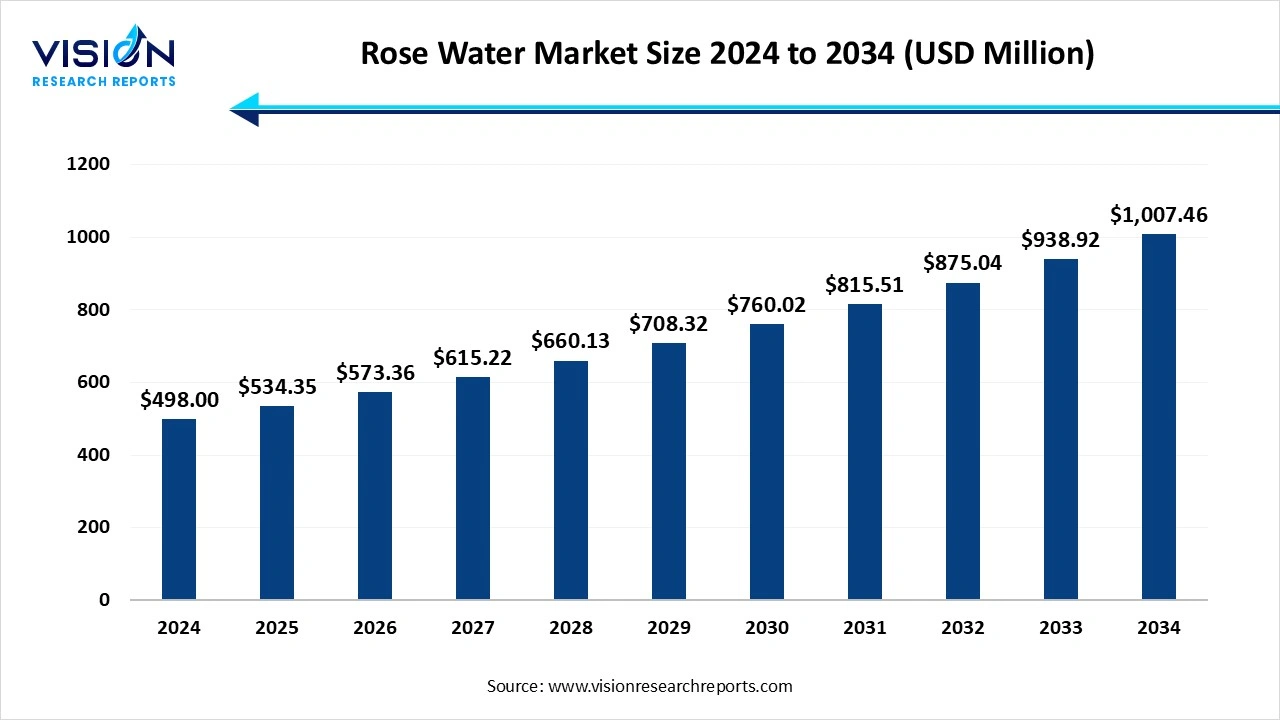
The global rose water market is experiencing significant growth, driven by rising consumer demand for natural and organic skincare solutions. Rose water, known for its soothing, anti-inflammatory, and antioxidant properties, is widely used in cosmetics, personal care, and culinary applications. Key factors propelling market expansion include increasing awareness of herbal beauty products, the growing popularity of aromatherapy, and the rising trend of clean-label products. Asia-Pacific and the Middle East lead the market due to their rich cultural history of rose cultivation, while North America and Europe witness rapid adoption driven by wellness-conscious consumers.
The growth of the rose water market is significantly driven by the increasing consumer preference for natural and organic skincare products. As consumers become more health-conscious and aware of the potential harm of synthetic chemicals in personal care items, there has been a notable shift towards using plant-based, chemical-free products like rose water. Rose water’s natural astringent, anti-inflammatory, and hydrating properties make it highly appealing to consumers seeking gentle and effective skincare solutions.
Another key growth factor for the rose water market is the rising demand for wellness and self-care products, including those used in aromatherapy and relaxation. Rose water’s calming and soothing effects have made it an integral part of wellness routines worldwide, particularly in the form of facial mists, toners, and bath additives. The increasing awareness about mental health and stress management has fueled interest in products that promote relaxation, such as rose water-based items. Furthermore, its widespread use in culinary applications, particularly in the Middle East, Asia, and parts of Europe, continues to drive growth, as consumers explore new and exotic flavors in gourmet foods and beverages
Europe region dominated the global rose water market with highest share of 42% in 2024. The region's strong cosmetic and personal care industry, coupled with consumer demand for clean and sustainable products, drives market expansion. Countries like France, Germany, and the United Kingdom are the leading contributors, with manufacturers focusing on product innovations and premium formulations to cater to evolving consumer preferences.
The rose water market in the Asia Pacific region is projected to experience a compound annual growth rate (CAGR) of 8.4% between 2025 and 2034. India, as a significant producer of roses, plays a vital role in the market, supplying high-quality rose water both domestically and internationally. Other countries, such as China and Japan, are witnessing increased demand due to the rising popularity of natural and herbal beauty products.
Rosa Gallica rose water, derived from the French rose, is known for its potent fragrance and strong astringent properties, making it an ideal ingredient in skincare products targeting oily or acne-prone skin. Its natural anti-inflammatory and antibacterial qualities also make it a preferred choice in medicinal and therapeutic formulations. Widely used in European herbal medicine, Rosa Gallica rose water is celebrated for its calming and healing effects on the skin, contributing to its sustained demand in global markets.
Rosa Centifolia rose water, commonly referred to as cabbage rose water, is prized for its delicate, sweet aroma and soothing properties. With a rich history of use in perfumery and luxury skincare products, Rosa Centifolia rose water is a popular choice for consumers seeking gentle, hydrating, and rejuvenating skincare solutions. This variety is frequently used in premium facial mists, toners, and anti-aging products, where its moisturizing and calming effects are highly valued. The growing demand for natural and organic skincare has further fueled the popularity of Rosa Centifolia rose water in global markets.
Rosa Damascena rose water, derived from the renowned Damask rose, is the most valuable and widely recognized type in the global rose water market. Known for its rich, complex fragrance and exceptional therapeutic benefits, Rosa Damascena rose water is extensively used in high-end cosmetics, aromatherapy, and culinary applications. Its superior antioxidant and anti-aging properties make it a sought-after ingredient in luxury skincare products, such as serums, creams, and facial mists. Regions such as Bulgaria, Turkey, and Iran are the largest producers of Rosa Damascena rose water, and their traditional cultivation practices further enhance the premium appeal of this product.
Personal care and cosmetics emerged as the largest application for rose water, holding more than 46% of the market share in 2024. Its natural astringent and anti-inflammatory properties make it an ideal choice for maintaining skin balance, reducing redness, and providing a refreshing glow. The growing demand for organic and chemical-free skincare solutions has further propelled the use of rose water in this segment.
The food and beverage industry also represents a significant application segment for rose water. It is widely used as a natural flavoring agent in Middle Eastern, Persian, Indian, and Mediterranean cuisines. From delicately scented desserts, such as Turkish delight and rose-flavored ice cream, to aromatic beverages like rose milk and herbal teas, rose water imparts a distinct floral aroma and flavor to various culinary creations. Its increasing adoption in gourmet recipes and craft beverages further contributes to market growth.
Indirect sales of rose water are expected to grow at a CAGR of 7.2% from 2025 to 2034. This channel offers convenience and accessibility to consumers, allowing them to purchase rose water products along with their regular shopping needs. E-commerce has emerged as a particularly significant indirect sales channel, driven by the increasing popularity of online shopping and the availability of a diverse range of rose water products from global and regional brands. Online platforms enable consumers to compare prices, read reviews, and access exclusive discounts, further boosting sales.
Direct sales involve the direct purchase of rose water products from manufacturers or authorized sellers, typically through brand-owned retail stores, official websites, or dedicated sales representatives. This channel allows manufacturers to maintain complete control over product quality, branding, and customer experience. Direct sales are particularly effective for premium rose water products, where consumers seek authenticity and are willing to pay a higher price for guaranteed quality. Luxury skincare and cosmetic brands specializing in rose water-based products often leverage direct sales to provide personalized services, including product customization and customer support.
By Product
By Application
By Distribution
By Regional
Chapter 1. Introduction
1.1. Research Objective
1.2. Scope of the Study
1.3. Definition
Chapter 2. Research Methodology
2.1. Research Approach
2.2. Data Sources
2.3. Assumptions & Limitations
Chapter 3. Executive Summary
3.1. Market Snapshot
Chapter 4. Market Variables and Scope
4.1. Introduction
4.2. Market Classification and Scope
4.3. Industry Value Chain Analysis
4.3.1. Raw Material Procurement Analysis
4.3.2. Sales and Distribution Product Analysis
4.3.3. Downstream Buyer Analysis
Chapter 5. COVID 19 Impact on Rose Water Market
5.1. COVID-19 Landscape: Rose Water Industry Impact
5.2. COVID 19 - Impact Assessment for the Industry
5.3. COVID 19 Impact: Global Major Government Policy
5.4. Market Trends and Opportunities in the COVID-19 Landscape
Chapter 6. Market Dynamics Analysis and Trends
6.1. Market Dynamics
6.1.1. Market Drivers
6.1.2. Market Restraints
6.1.3. Market Opportunities
6.2. Porter’s Five Forces Analysis
6.2.1. Bargaining power of suppliers
6.2.2. Bargaining power of buyers
6.2.3. Threat of substitute
6.2.4. Threat of new entrants
6.2.5. Degree of competition
Chapter 7. Competitive Landscape
7.1.1. Company Market Share/Positioning Analysis
7.1.2. Key Strategies Adopted by Players
7.1.3. Vendor Landscape
7.1.3.1. List of Suppliers
7.1.3.2. List of Buyers
Chapter 8. Global Rose Water Market, By Product
8.1. Rose Water Market, by Product
8.1.1 Rosa Gallica
8.1.1.1. Market Revenue and Forecast
8.1.2. Rosa Damascene
8.1.2.1. Market Revenue and Forecast
8.1.3. Rosa Centifolia
8.1.3.1. Market Revenue and Forecast
Chapter 9. Global Rose Water Market, By Application
9.1. Rose Water Market, by Application
9.1.1. Personal Care & Cosmetics
9.1.1.1. Market Revenue and Forecast
9.1.2. Medicinal Use
9.1.2.1. Market Revenue and Forecast
9.1.3. Food & Personal Care & Cosmetics
9.1.3.1. Market Revenue and Forecast
9.1.4. Others
9.1.4.1. Market Revenue and Forecast
Chapter 10. Global Rose Water Market, By Distribution
10.1. Rose Water Market, by Distribution
10.1.1. Indirect Sales
10.1.1.1. Market Revenue and Forecast
10.1.2. Direct Sales
10.1.2.1. Market Revenue and Forecast
Chapter 11. Global Rose Water Market, Regional Estimates and Trend Forecast
11.1. North America
11.1.1. Market Revenue and Forecast, by Product
11.1.2. Market Revenue and Forecast, by Application
11.1.3. Market Revenue and Forecast, by Distribution
11.1.4. U.S.
11.1.4.1. Market Revenue and Forecast, by Product
11.1.4.2. Market Revenue and Forecast, by Application
11.1.4.3. Market Revenue and Forecast, by Distribution
11.1.5. Rest of North America
11.1.5.1. Market Revenue and Forecast, by Product
11.1.5.2. Market Revenue and Forecast, by Application
11.1.5.3. Market Revenue and Forecast, by Distribution
11.2. Europe
11.2.1. Market Revenue and Forecast, by Product
11.2.2. Market Revenue and Forecast, by Application
11.2.3. Market Revenue and Forecast, by Distribution
11.2.4. UK
11.2.4.1. Market Revenue and Forecast, by Product
11.2.4.2. Market Revenue and Forecast, by Application
11.2.4.3. Market Revenue and Forecast, by Distribution
11.2.5. Germany
11.2.5.1. Market Revenue and Forecast, by Product
11.2.5.2. Market Revenue and Forecast, by Application
11.2.5.3. Market Revenue and Forecast, by Distribution
11.2.6. France
11.2.6.1. Market Revenue and Forecast, by Product
11.2.6.2. Market Revenue and Forecast, by Application
11.2.6.3. Market Revenue and Forecast, by Distribution
11.2.7. Rest of Europe
11.2.7.1. Market Revenue and Forecast, by Product
11.2.7.2. Market Revenue and Forecast, by Application
11.2.7.3. Market Revenue and Forecast, by Distribution
11.3. APAC
11.3.1. Market Revenue and Forecast, by Product
11.3.2. Market Revenue and Forecast, by Application
11.3.3. Market Revenue and Forecast, by Distribution
11.3.4. India
11.3.4.1. Market Revenue and Forecast, by Product
11.3.4.2. Market Revenue and Forecast, by Application
11.3.4.3. Market Revenue and Forecast, by Distribution
11.3.5. China
11.3.5.1. Market Revenue and Forecast, by Product
11.3.5.2. Market Revenue and Forecast, by Application
11.3.5.3. Market Revenue and Forecast, by Distribution
11.3.6. Japan
11.3.6.1. Market Revenue and Forecast, by Product
11.3.6.2. Market Revenue and Forecast, by Application
11.3.6.3. Market Revenue and Forecast, by Distribution
11.3.7. Rest of APAC
11.3.7.1. Market Revenue and Forecast, by Product
11.3.7.2. Market Revenue and Forecast, by Application
11.3.7.3. Market Revenue and Forecast, by Distribution
11.4. MEA
11.4.1. Market Revenue and Forecast, by Product
11.4.2. Market Revenue and Forecast, by Application
11.4.3. Market Revenue and Forecast, by Distribution
11.4.4. GCC
11.4.4.1. Market Revenue and Forecast, by Product
11.4.4.2. Market Revenue and Forecast, by Application
11.4.4.3. Market Revenue and Forecast, by Distribution
11.4.5. North Africa
11.4.5.1. Market Revenue and Forecast, by Product
11.4.5.2. Market Revenue and Forecast, by Application
11.4.5.3. Market Revenue and Forecast, by Distribution
11.4.6. South Africa
11.4.6.1. Market Revenue and Forecast, by Product
11.4.6.2. Market Revenue and Forecast, by Application
11.4.6.3. Market Revenue and Forecast, by Distribution
11.4.7. Rest of MEA
11.4.7.1. Market Revenue and Forecast, by Product
11.4.7.2. Market Revenue and Forecast, by Application
11.4.7.3. Market Revenue and Forecast, by Distribution
11.5. Latin America
11.5.1. Market Revenue and Forecast, by Product
11.5.2. Market Revenue and Forecast, by Application
11.5.3. Market Revenue and Forecast, by Distribution
11.5.4. Brazil
11.5.4.1. Market Revenue and Forecast, by Product
11.5.4.2. Market Revenue and Forecast, by Application
11.5.4.3. Market Revenue and Forecast, by Distribution
11.5.5. Rest of LATAM
11.5.5.1. Market Revenue and Forecast, by Product
11.5.5.2. Market Revenue and Forecast, by Application
11.5.5.3. Market Revenue and Forecast, by Distribution
Chapter 12. Company Profiles
12.1. Herbivore Botanicals
12.1.1. Company Overview
12.1.2. Product Offerings
12.1.3. Financial Performance
12.1.4. Recent Initiatives
12.2. Gulab Singh Johrimal
12.2.1. Company Overview
12.2.2. Product Offerings
12.2.3. Financial Performance
12.2.4. Recent Initiatives
12.3. Rosa Damascena (Bulgarian Rose).
12.3.1. Company Overview
12.3.2. Product Offerings
12.3.3. Financial Performance
12.3.4. Recent Initiatives
12.4. Mountain Rose Herbs
e.12.4.1. Company Overview
12.4.2. Product Offerings
12.4.3. Financial Performance
12.4.4. Recent Initiatives
12.5. Shahnaz Husain.
12.5.1. Company Overview
12.5.2. Product Offerings
12.5.3. Financial Performance
12.5.4. Recent Initiatives
12.6. Kama Ayurveda
12.6.1. Company Overview
12.6.2. Product Offerings
12.6.3. Financial Performance
12.6.4. Recent Initiatives
12.7. Leven Rose
12.7.1. Company Overview
12.7.2. Product Offerings
12.7.3. Financial Performance
12.7.4. Recent Initiatives
12.8. Tata Harper
12.8.1. Company Overview
12.8.2. Product Offerings
12.8.3. Financial Performance
12.8.4. Recent Initiatives
12.9 Aromaaz International
12.9.1. Company Overview
12.9.2. Product Offerings
12.9.3. Financial Performance
12.9.4. Recent Initiatives
12.10. The Rose Hydrosol Company
12.10.1. Company Overview
12.10.2. Product Offerings
12.10.3. Financial Performance
12.10.4. Recent Initiatives
Chapter 13. Research Methodology
13.1. Primary Research
13.2. Secondary Research
13.3. Assumptions
Chapter 14. Appendix
14.1. About Us
14.2. Glossary of Terms
 Cross-segment Market Size and Analysis for
Mentioned Segments
Additional Company Profiles (Upto 5 With No Cost)
Additional Countries (Apart From Mentioned Countries)
Country/Region-specific Report
Go To Market Strategy
Region Specific Market DynamicsRegion Level Market Share Import Export AnalysisProduction AnalysisOthers
Cross-segment Market Size and Analysis for
Mentioned Segments
Additional Company Profiles (Upto 5 With No Cost)
Additional Countries (Apart From Mentioned Countries)
Country/Region-specific Report
Go To Market Strategy
Region Specific Market DynamicsRegion Level Market Share Import Export AnalysisProduction AnalysisOthers