
U.S. Veterinary Neurodegenerative Disease Diagnostics Market Size and Companies
The U.S. veterinary neurodegenerative disease diagnostics market size was evaluated at around USD 105.46 million in 2024 and it is projected to hit around USD 214.34 million by 2034, growing at a CAGR of 7.35% from 2025 to 2034.
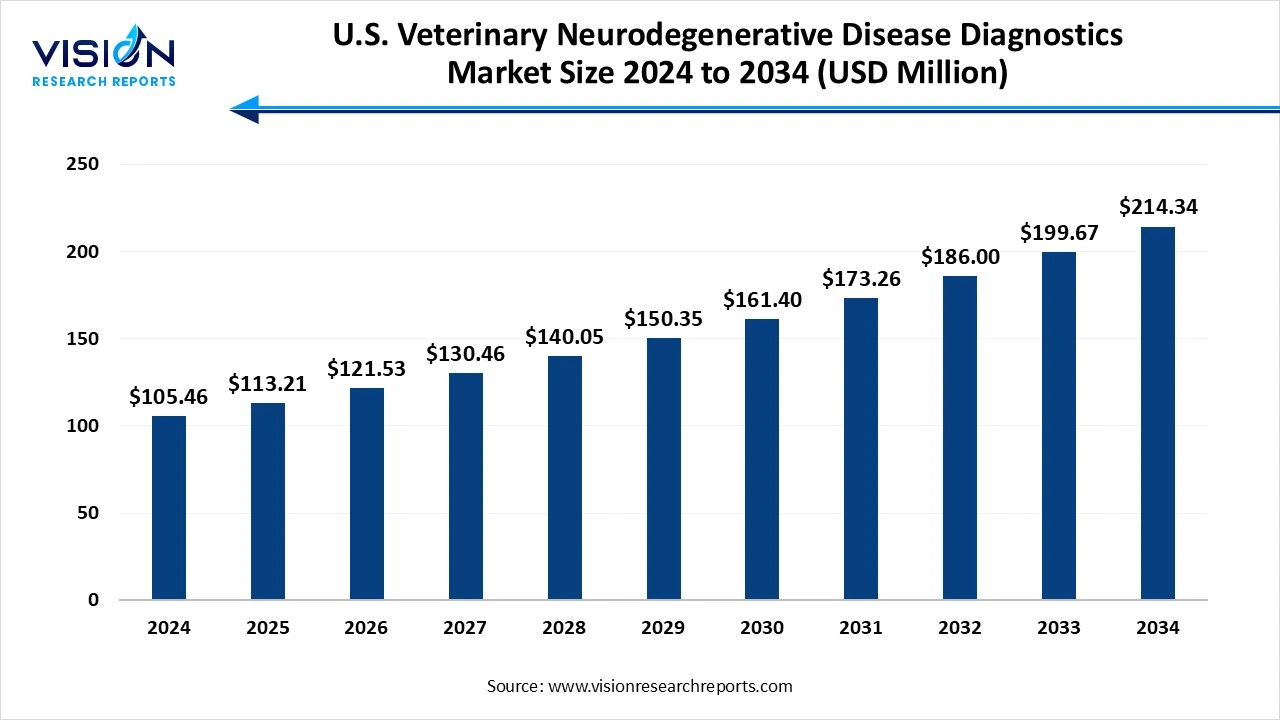
The U.S. veterinary neurodegenerative disease diagnostics market is witnessing growing interest and expansion due to the rising prevalence of neurological disorders among companion animals and livestock. Conditions such as canine cognitive dysfunction, equine protozoal myeloencephalitis, and feline dementia are increasingly being recognized by pet owners and veterinarians alike, leading to a higher demand for accurate and early diagnostic solutions. With advancements in veterinary imaging techniques, genetic testing, and biomarker research, diagnostic accuracy has significantly improved, fostering trust in veterinary healthcare.
One of the primary growth factors driving the U.S. veterinary neurodegenerative disease diagnostics market is the increasing prevalence of neurological disorders in animals, particularly among aging pets. As more pet owners consider animals as part of their family, there is a higher demand for early and accurate diagnosis of chronic and progressive conditions such as canine cognitive dysfunction and equine neurodegenerative diseases. This shift in pet care culture is pushing veterinary practices to adopt advanced diagnostic methods, including neuroimaging and molecular testing, which enhances the precision of diagnoses and improves long-term care planning.
Another significant growth driver is the rapid technological advancement in diagnostic tools and veterinary healthcare infrastructure. The integration of artificial intelligence in imaging diagnostics, the development of specific biomarkers for neurological conditions, and the availability of portable diagnostic equipment are making it easier and more efficient for veterinarians to assess complex neurological issues.
A notable trend in the U.S. veterinary neurodegenerative disease diagnostics market is the growing adoption of advanced imaging technologies such as magnetic resonance imaging (MRI) and computed tomography (CT) scans. These tools are becoming more accessible in veterinary clinics and hospitals, enabling early and precise detection of neurodegenerative conditions. The rising use of digital imaging and 3D visualization is not only improving diagnostic accuracy but also enhancing client communication, allowing pet owners to better understand their animal’s condition and treatment options.
Another emerging trend is the integration of genomics and biomarker-based diagnostics in veterinary neurology. Researchers and diagnostic companies are increasingly focusing on identifying specific genetic markers and protein expressions associated with neurodegenerative diseases. This shift towards personalized diagnostics is opening new pathways for preventive care and targeted treatment strategies.
One of the key challenges faced by the U.S. veterinary neurodegenerative disease diagnostics market is the high cost associated with advanced diagnostic procedures. Tools such as MRI, CT scans, and molecular assays require significant investment in equipment and trained personnel, making them less accessible to smaller clinics and pet owners with limited budgets. This often results in delayed or missed diagnoses, particularly in rural or underserved areas.
Another major challenge is the limited awareness and understanding of neurodegenerative diseases among both pet owners and some general practice veterinarians. These conditions are often underdiagnosed or misinterpreted due to subtle symptoms that mimic behavioral or age-related issues. In addition, the lack of standardized diagnostic criteria and limited availability of validated biomarkers hampers consistency in diagnosis and treatment planning.
The consumables, reagents, and kits segment captured the highest revenue share in 2024 and is projected to expand at the fastest CAGR during the forecast period. These products are essential for conducting immunoassays, molecular diagnostics, biomarker detection, and other laboratory-based evaluations that are crucial for identifying neurological disorders in animals. Veterinary diagnostic kits are increasingly being developed with high specificity and sensitivity to detect disease-related biomarkers in samples such as blood, cerebrospinal fluid, and saliva.
The equipment and instruments constitute another critical product category in this market, as they facilitate the visualization and analysis of neurological structures and functions. Advanced diagnostic equipment such as magnetic resonance imaging (MRI) systems, computed tomography (CT) scanners, digital radiography units, and electroencephalography (EEG) devices are becoming more prevalent in veterinary hospitals and specialty clinics. These tools allow for non-invasive and highly accurate evaluation of the brain and spinal cord, enabling veterinarians to detect structural abnormalities, lesions, or signs of atrophy associated with neurodegenerative diseases.
The imaging segment accounted for the highest market share of 46% in 2024. Advanced imaging modalities such as magnetic resonance imaging (MRI) and computed tomography (CT) scans are increasingly being utilized in veterinary practices to detect structural abnormalities in the brain and spinal cord. These imaging technologies enable veterinarians to observe signs of neurodegeneration, such as brain atrophy, lesions, and inflammation, with high resolution and accuracy. MRI, in particular, is valued for its ability to produce detailed images of soft tissues without exposing animals to ionizing radiation.
The biomarker diagnostic tests segment is projected to witness the highest CAGR of 7.8% over the forecast period. Biomarkers biological molecules that signal pathological changes are being investigated and applied to evaluate disease progression and therapeutic responses in animals. These may include proteins, peptides, or genetic markers that reflect changes in the nervous system. Recent advances in molecular biology and proteomics have enabled the development of non-invasive tests using blood, cerebrospinal fluid, or even saliva to identify neurological biomarkers. These tests are gaining traction for their potential to support early-stage diagnosis before clinical symptoms become evident.
The companion animal segment led the U.S. veterinary neurodegenerative disease diagnostics market and is anticipated to register the fastest CAGR throughout the forecast period in 2024. Pet owners are increasingly opting for regular health screenings, and as a result, neurological conditions that may have gone unnoticed in the past are now being diagnosed at earlier stages. Furthermore, the integration of digital platforms, telehealth consultations, and AI-assisted diagnostic systems is making specialized neurological evaluations more accessible across a broader geographic range.
The companion animals represent a significant segment due to the increasing awareness of neurological disorders among pet owners and the rising prevalence of age-related conditions in pets. Dogs and cats, particularly as they grow older, are more susceptible to neurodegenerative diseases such as cognitive dysfunction syndrome, epilepsy, and degenerative myelopathy. With the humanization of pets becoming more widespread, owners are more willing to invest in advanced diagnostic procedures to ensure the health and quality of life of their animals. This shift has driven the demand for early and accurate diagnostic tools, including imaging technologies, genetic testing, and neurological assessments.
The cognitive dysfunction segment accounted for the highest revenue share in 2024 and is forecasted to grow at the fastest CAGR throughout the projected period. Commonly referred to as Canine Cognitive Dysfunction (CCD) in dogs and feline cognitive dysfunction in cats, this condition mirrors Alzheimer’s disease in humans and typically affects older pets. As awareness of cognitive dysfunction increases among pet owners and veterinary professionals, there is a growing emphasis on early detection through behavioral assessments, imaging studies, and biomarker analysis. Diagnostic tools such as MRI and cognitive testing scales are being increasingly employed to evaluate symptoms like disorientation, memory loss, changes in interaction, and altered sleep patterns.
The beyond cognitive dysfunction, the market also encompasses other neurodegenerative indications such as epilepsy, degenerative myelopathy, and infectious or inflammatory brain diseases like encephalitis. These conditions often present with overlapping neurological symptoms, making accurate diagnosis both complex and critical. Advances in molecular diagnostics, spinal fluid analysis, and electrophysiological testing are contributing to improved differentiation between various disorders.
In the U.S. veterinary neurodegenerative disease diagnostics market, veterinary hospitals and clinics play a critical role as primary end-users of diagnostic technologies. These facilities are often the first point of contact for pet owners seeking medical evaluation for animals displaying signs of neurological disorders. As awareness of conditions such as cognitive dysfunction, epilepsy, and degenerative myelopathy continues to grow, veterinary clinics are increasingly integrating specialized diagnostic tools, including magnetic resonance imaging (MRI), computed tomography (CT), electroencephalography (EEG), and in-house laboratory testing capabilities.
The veterinary diagnostic laboratories segment is projected to register the fastest CAGR of approximately 8.1% over the forecast period. These laboratories typically handle complex sample analyses, such as cerebrospinal fluid testing, biomarker detection, and genetic screening, which are crucial for confirming neurodegenerative disease diagnoses. Equipped with advanced technologies and staffed by highly trained specialists, veterinary diagnostic labs contribute to increased accuracy and reliability in detecting neurological conditions.
By Product
By Diagnostic Tests
By Animal Type
By Indication
By End-use
 Cross-segment Market Size and Analysis for
Mentioned Segments
Additional Company Profiles (Upto 5 With No Cost)
Additional Countries (Apart From Mentioned Countries)
Country/Region-specific Report
Go To Market Strategy
Region Specific Market DynamicsRegion Level Market Share Import Export AnalysisProduction AnalysisOthers
Cross-segment Market Size and Analysis for
Mentioned Segments
Additional Company Profiles (Upto 5 With No Cost)
Additional Countries (Apart From Mentioned Countries)
Country/Region-specific Report
Go To Market Strategy
Region Specific Market DynamicsRegion Level Market Share Import Export AnalysisProduction AnalysisOthers