The global anti-hypertensive drugs market size was estimated at USD 24.92 billion in 2024 and is expected to grow to USD 25.94 billion in 2025, to reach USD 37.24 billion by 2034, growing at a CAGR of 4.1%. The market growth is driven by the rising prevalence of hypertension, aging populations, and unhealthy lifestyles. Advancements in drug development, growing use of combination therapies, and the shift toward personalized medicine are boosting treatment effectiveness.
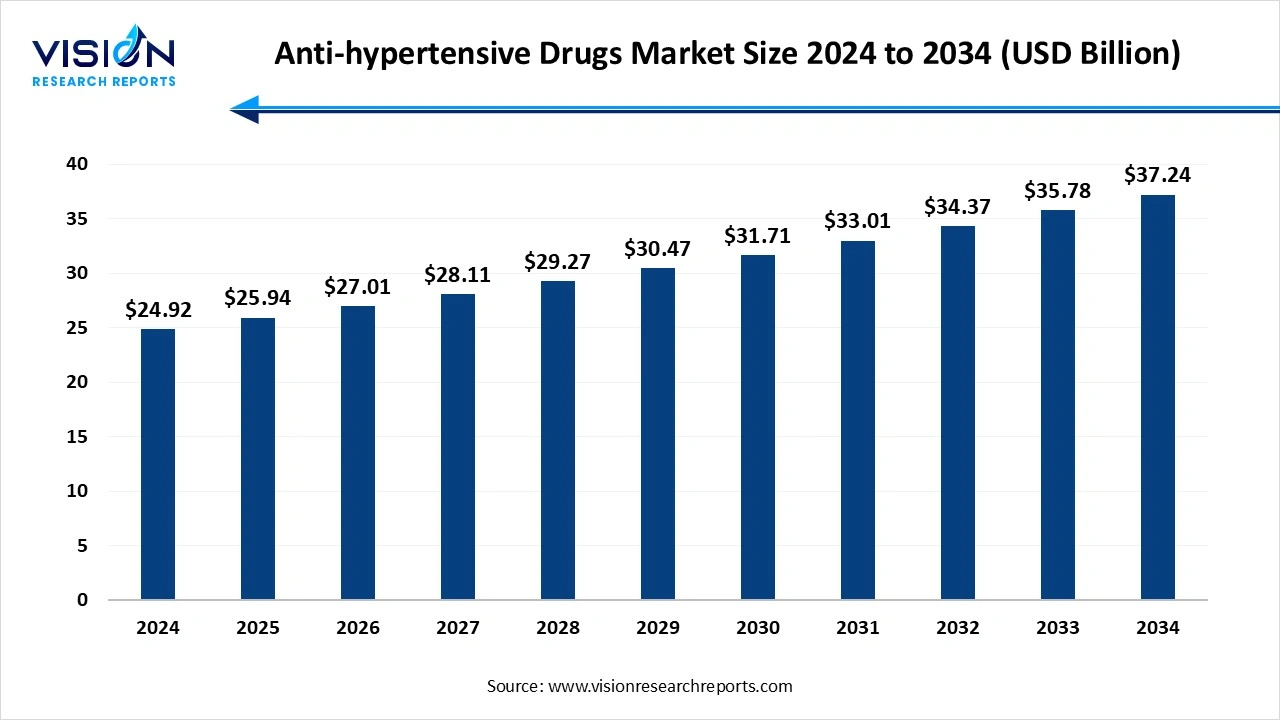 Key Pointers
The anti-hypertensive drugs market plays a pivotal role in addressing the global health challenge posed by hypertension, a prevalent condition characterized by elevated blood pressure levels. This overview provides insights into the key facets shaping the market, including market dynamics, major players, therapeutic classes, and notable trends.
The growth of the anti-hypertensive drugs market is propelled by several key factors. Firstly, the escalating global prevalence of hypertension, exacerbated by lifestyle changes and an aging population, serves as a primary driver for market expansion. Additionally, ongoing advancements in pharmaceutical research and development contribute to the discovery of innovative drugs, fostering increased efficacy and minimized side effects. Government initiatives promoting healthcare awareness and increased expenditure further create a conducive environment for market growth. The evolving trend towards personalized medicine, tailoring treatment approaches to individual patient profiles, and the increasing adoption of combination therapies to enhance efficacy represent significant factors shaping the trajectory of the anti-hypertensive drugs market. As digital health solutions become integrated for monitoring and managing hypertension, the market is poised for sustained growth, driven by a comprehensive approach to addressing the complex and widespread health challenge posed by elevated blood pressure levels.
| Report Coverage | Details |
| Market Revenue by 2034 | USD 24.92 billion |
| Revenue Forecast by 2034 | USD 37.24 billion |
| Growth Rate from 2025 to 2034 | CAGR of 4.1% |
| Revenue Share of North America in 2023 | 36% |
| Base Year | 2024 |
| Forecast Period | 2025 to 2034 |
| Regions | North America, Europe, Asia Pacific, Latin America, Middle East & Africa |
| Companies Covered | Sanofi, Boehringer Ingelheim International GmbH, Novartis AG, Johnson & Johnson Services, Inc., Daiichi Sankyo Company Limited, Merck & Co., Inc., AstraZeneca, Pfizer Inc., Lupin, and Sun Pharmaceutical Industries Ltd. |
Anti-hypertensive Drugs Market Restraints
Anti-hypertensive Drugs Market Opportunities
North America accounted for the largest revenue share of 36% in 2024 owing to the availability of anti-hypertensive drugs and development of new and more effective anti-hypertensive drugs. Moreover, surge in the incidence of hypertension and rise in obesity significantly contribute to the growth of the market in the region. According to Centers for Disease Control and Prevention, obesity in the U.S. affects 100.1 million people in 2023, with adults 41.9% and 19.7% of children. These factors are contributing to the significant share of the region.
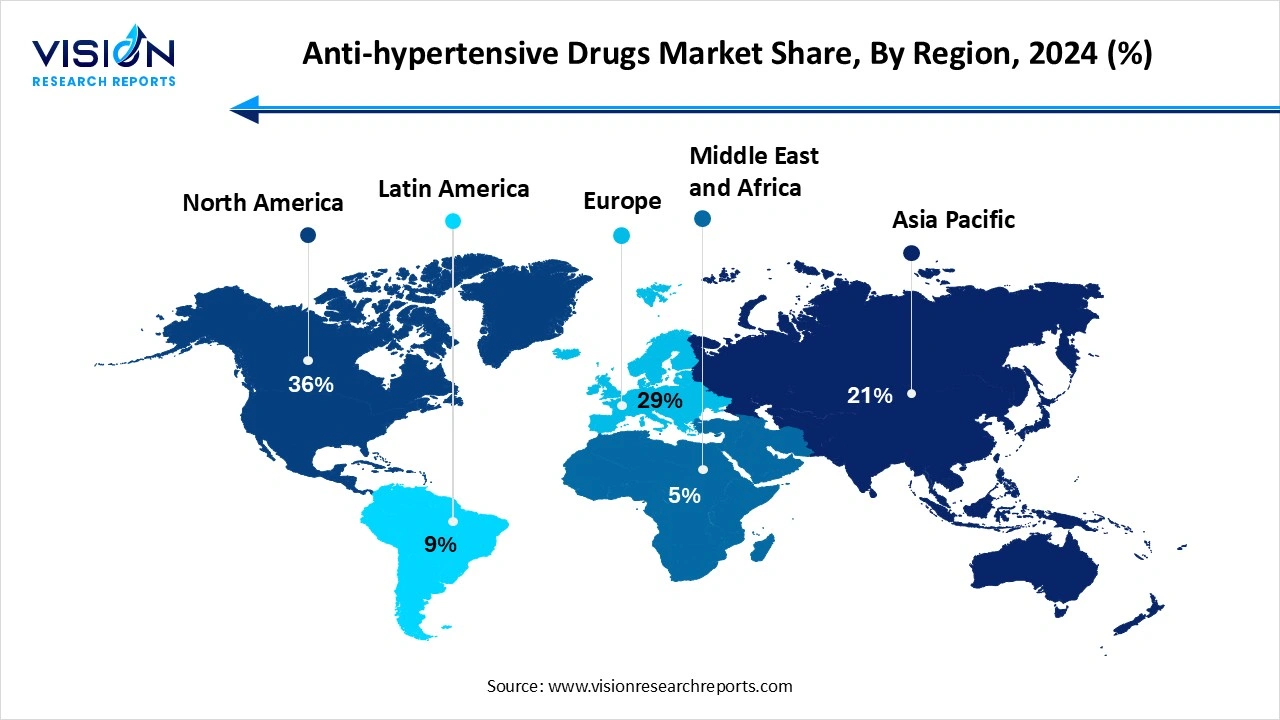
Asia Pacific is estimated to grow at the fastest CAGR during the forecast period. Increasing prevalence of hypertension in Asia Pacific region is a major driver for the market. As the population ages and lifestyles change, incidence of hypertension is rising. Excessive salt consumption is a significant contributor to the prevalence of hypertension in the Asia Pacific region. According to the WHO, China consumes excessive salt in food, an average of 9.3 grams per day in home cooking, which is approximately double as compared to the recommended amount. More than 27.5% of Chinese adults have high blood pressure and cardiovascular disease. These factors are expected to drive the regional market growth.
The angiotensin II receptor blockers (ARBs) segment holds a significant share in the global anti-hypertensive drugs market, driven by their proven efficacy and favorable safety profile. ARBs work by blocking the action of angiotensin II, a hormone responsible for constricting blood vessels, thereby lowering blood pressure and reducing the risk of cardiovascular complications. These drugs are widely prescribed for patients who cannot tolerate angiotensin-converting enzyme (ACE) inhibitors due to side effects such as cough or angioedema. The increasing prevalence of hypertension, coupled with rising awareness about the long-term benefits of ARBs in managing cardiovascular health, is expected to propel their demand in the coming years.
ACE inhibitors segment is expected to grow at the fastest CAGR of 4.98% over the forecast period. The rising prevalence of high blood pressure and increasing prescription of these drugs for cardiovascular diseases & other chronic conditions are major drivers for the segment growth. Moreover, availability of generic forms makes it a cost-effective option for hypertension management, which is anticipated to increase the prescription rate over the projected years.
The standard hypertension segment generated the maximum market share of 88% 2024. This form of hypertension, which accounts for the majority of diagnosed cases, is typically managed with first-line medications such as ACE inhibitors, ARBs, calcium channel blockers, beta-blockers, and diuretics. Growing awareness about early diagnosis, lifestyle-related risk factors, and the availability of effective treatment options have significantly increased the number of patients seeking medical intervention.
The treatment-resistant hypertension segment is predicted to grow at the remarkable CAGR during the forecast period.TRH refers to high blood pressure that remains uncontrolled despite the use of three or more antihypertensive medications, including a diuretic. The increasing incidence of obesity, diabetes, and chronic kidney disease has been linked to a rise in treatment-resistant cases. Pharmaceutical companies are focusing on developing novel therapeutic approaches, such as mineralocorticoid receptor antagonists and combination therapies, to manage these complex conditions effectively.
Oral segment contributed the largest market share of 92% in 2024 and is expected to grow at the fastest CAGR. This growth is attributed to increased patient preference for oral medications and growing demand for fixed-dose combinations of anti-hypertensive drugs. Pharmaceutical companies constantly develop new oral anti-hypertensive drugs with improved efficacy and safety profiles. This is also driving the growth of the market's oral route of administration segment. In April 2021, the FDA approved Macitentan Tablets, 10 mg of Zydus Worldwide DMCC. These tablets are used to treat pulmonary arterial hypertension and reduce the risks of disease progression.
The transdermal route of administration is segment expected to expand at the highest CAGR during the forecast period. Transdermal patches deliver the drug through the skin directly into the bloodstream, providing controlled and sustained release over an extended period. This route offers advantages such as improved bioavailability, reduced dosing frequency, and enhanced patient comfort. It is particularly beneficial for elderly patients or those with poor medication adherence. Pharmaceutical companies are investing in the development of advanced transdermal delivery systems that ensure consistent therapeutic outcomes with minimal side effects. Although currently a smaller segment compared to oral formulations, the transdermal route is expected to experience steady growth due to ongoing innovations in drug delivery technologies and the rising demand for non-invasive treatment options.
The retail pharmacy segment captured the maximum market share of 48% in 2024. Retail pharmacies serve as the most accessible point of purchase for patients, offering convenience and affordability, especially for those managing chronic conditions like hypertension that require continuous medication. The growing presence of organized pharmacy chains, online prescription services, and home delivery options has further expanded the reach of this distribution channel. Additionally, retail pharmacists often play an essential role in patient counseling, adherence monitoring, and medication management, contributing to better treatment outcomes.
The others segment, which includes hospital pharmacies, online pharmacies, and specialty clinics, is witnessing steady growth due to the diversification of distribution networks and the digital transformation of healthcare services. Hospital pharmacies are preferred for patients receiving inpatient care or undergoing treatment for severe hypertension and related cardiovascular complications. Meanwhile, online pharmacies have gained traction with the increasing adoption of e-commerce platforms and telemedicine, allowing patients to conveniently order prescribed antihypertensive drugs from home. The growing number of specialty clinics offering comprehensive cardiovascular care and follow-up prescriptions also contributes to the segment’s expansion.
By Product
By Type
By Route of Administration
By Distribution Channel
By Region
Chapter 1. Introduction
1.1. Research Objective
1.2. Scope of the Study
1.3. Definition
Chapter 2. Research Methodology
2.1. Research Approach
2.2. Data Sources
2.3. Assumptions & Limitations
Chapter 3. Executive Summary
3.1. Market Snapshot
Chapter 4. Market Variables and Scope
4.1. Introduction
4.2. Market Classification and Scope
4.3. Industry Value Chain Analysis
4.3.1. Raw Material Procurement Analysis
4.3.2. Sales and Distribution Channel Analysis
4.3.3. Downstream Buyer Analysis
Chapter 5. COVID 19 Impact on Anti-hypertensive Drugs Market
5.1. COVID-19 Landscape: Anti-hypertensive Drugs Industry Impact
5.2. COVID 19 - Impact Assessment for the Industry
5.3. COVID 19 Impact: Global Major Government Policy
5.4. Market Trends and Opportunities in the COVID-19 Landscape
Chapter 6. Market Dynamics Analysis and Trends
6.1. Market Dynamics
6.1.1. Market Drivers
6.1.2. Market Restraints
6.1.3. Market Opportunities
6.2. Porter’s Five Forces Analysis
6.2.1. Bargaining power of suppliers
6.2.2. Bargaining power of buyers
6.2.3. Threat of substitute
6.2.4. Threat of new entrants
6.2.5. Degree of competition
Chapter 7. Competitive Landscape
7.1.1. Company Market Share/Positioning Analysis
7.1.2. Key Strategies Adopted by Players
7.1.3. Vendor Landscape
7.1.3.1. List of Suppliers
7.1.3.2. List of Buyers
Chapter 8. Global Anti-hypertensive Drugs Market, By Product
8.1. Anti-hypertensive Drugs Market, by Product,
8.1.1. Diuretics
8.1.1.1. Market Revenue and Forecast
8.1.2. ACE Inhibitors
8.1.2.1. Market Revenue and Forecast
8.1.3. Calcium Channel Blockers
8.1.3.1. Market Revenue and Forecast
8.1.4. Beta-adrenergic Blockers
8.1.4.1. Market Revenue and Forecast
8.1.5. Vasodilators
8.1.5.1. Market Revenue and Forecast
8.1.6. Others
8.1.6.1. Market Revenue and Forecast
Chapter 9. Global Anti-hypertensive Drugs Market, By Type
9.1. Anti-hypertensive Drugs Market, by Type,
9.1.1. Primary Hypertension
9.1.1.1. Market Revenue and Forecast
9.1.2. Secondary Hypertension
9.1.2.1. Market Revenue and Forecast
Chapter 10. Global Anti-hypertensive Drugs Market, By Route of Administration
10.1. Anti-hypertensive Drugs Market, by Route of Administration,
10.1.1. Oral
10.1.1.1. Market Revenue and Forecast
10.1.2. Injectables
10.1.2.1. Market Revenue and Forecast
10.1.3. Others
10.1.3.1. Market Revenue and Forecast
Chapter 11. Global Anti-hypertensive Drugs Market, By Distribution Channel
11.1. Anti-hypertensive Drugs Market, by Distribution Channel,
11.1.1. Retail Pharmacy
11.1.1.1. Market Revenue and Forecast
11.1.2. Hospital Pharmacy
11.1.2.1. Market Revenue and Forecast
11.1.3. Online Pharmacy
11.1.3.1. Market Revenue and Forecast
Chapter 12. Global Anti-hypertensive Drugs Market, Regional Estimates and Trend Forecast
12.1. North America
12.1.1. Market Revenue and Forecast, by Product
12.1.2. Market Revenue and Forecast, by Type
12.1.3. Market Revenue and Forecast, by Route of Administration
12.1.4. Market Revenue and Forecast, by Distribution Channel
12.1.5. U.S.
12.1.5.1. Market Revenue and Forecast, by Product
12.1.5.2. Market Revenue and Forecast, by Type
12.1.5.3. Market Revenue and Forecast, by Route of Administration
12.1.5.4. Market Revenue and Forecast, by Distribution Channel
12.1.6. Rest of North America
12.1.6.1. Market Revenue and Forecast, by Product
12.1.6.2. Market Revenue and Forecast, by Type
12.1.6.3. Market Revenue and Forecast, by Route of Administration
12.1.6.4. Market Revenue and Forecast, by Distribution Channel
12.2. Europe
12.2.1. Market Revenue and Forecast, by Product
12.2.2. Market Revenue and Forecast, by Type
12.2.3. Market Revenue and Forecast, by Route of Administration
12.2.4. Market Revenue and Forecast, by Distribution Channel
12.2.5. UK
12.2.5.1. Market Revenue and Forecast, by Product
12.2.5.2. Market Revenue and Forecast, by Type
12.2.5.3. Market Revenue and Forecast, by Route of Administration
12.2.5.4. Market Revenue and Forecast, by Distribution Channel
12.2.6. Germany
12.2.6.1. Market Revenue and Forecast, by Product
12.2.6.2. Market Revenue and Forecast, by Type
12.2.6.3. Market Revenue and Forecast, by Route of Administration
12.2.6.4. Market Revenue and Forecast, by Distribution Channel
12.2.7. France
12.2.7.1. Market Revenue and Forecast, by Product
12.2.7.2. Market Revenue and Forecast, by Type
12.2.7.3. Market Revenue and Forecast, by Route of Administration
12.2.7.4. Market Revenue and Forecast, by Distribution Channel
12.2.8. Rest of Europe
12.2.8.1. Market Revenue and Forecast, by Product
12.2.8.2. Market Revenue and Forecast, by Type
12.2.8.3. Market Revenue and Forecast, by Route of Administration
12.2.8.4. Market Revenue and Forecast, by Distribution Channel
12.3. APAC
12.3.1. Market Revenue and Forecast, by Product
12.3.2. Market Revenue and Forecast, by Type
12.3.3. Market Revenue and Forecast, by Route of Administration
12.3.4. Market Revenue and Forecast, by Distribution Channel
12.3.5. India
12.3.5.1. Market Revenue and Forecast, by Product
12.3.5.2. Market Revenue and Forecast, by Type
12.3.5.3. Market Revenue and Forecast, by Route of Administration
12.3.5.4. Market Revenue and Forecast, by Distribution Channel
12.3.6. China
12.3.6.1. Market Revenue and Forecast, by Product
12.3.6.2. Market Revenue and Forecast, by Type
12.3.6.3. Market Revenue and Forecast, by Route of Administration
12.3.6.4. Market Revenue and Forecast, by Distribution Channel
12.3.7. Japan
12.3.7.1. Market Revenue and Forecast, by Product
12.3.7.2. Market Revenue and Forecast, by Type
12.3.7.3. Market Revenue and Forecast, by Route of Administration
12.3.7.4. Market Revenue and Forecast, by Distribution Channel
12.3.8. Rest of APAC
12.3.8.1. Market Revenue and Forecast, by Product
12.3.8.2. Market Revenue and Forecast, by Type
12.3.8.3. Market Revenue and Forecast, by Route of Administration
12.3.8.4. Market Revenue and Forecast, by Distribution Channel
12.4. MEA
12.4.1. Market Revenue and Forecast, by Product
12.4.2. Market Revenue and Forecast, by Type
12.4.3. Market Revenue and Forecast, by Route of Administration
12.4.4. Market Revenue and Forecast, by Distribution Channel
12.4.5. GCC
12.4.5.1. Market Revenue and Forecast, by Product
12.4.5.2. Market Revenue and Forecast, by Type
12.4.5.3. Market Revenue and Forecast, by Route of Administration
12.4.5.4. Market Revenue and Forecast, by Distribution Channel
12.4.6. North Africa
12.4.6.1. Market Revenue and Forecast, by Product
12.4.6.2. Market Revenue and Forecast, by Type
12.4.6.3. Market Revenue and Forecast, by Route of Administration
12.4.6.4. Market Revenue and Forecast, by Distribution Channel
12.4.7. South Africa
12.4.7.1. Market Revenue and Forecast, by Product
12.4.7.2. Market Revenue and Forecast, by Type
12.4.7.3. Market Revenue and Forecast, by Route of Administration
12.4.7.4. Market Revenue and Forecast, by Distribution Channel
12.4.8. Rest of MEA
12.4.8.1. Market Revenue and Forecast, by Product
12.4.8.2. Market Revenue and Forecast, by Type
12.4.8.3. Market Revenue and Forecast, by Route of Administration
12.4.8.4. Market Revenue and Forecast, by Distribution Channel
12.5. Latin America
12.5.1. Market Revenue and Forecast, by Product
12.5.2. Market Revenue and Forecast, by Type
12.5.3. Market Revenue and Forecast, by Route of Administration
12.5.4. Market Revenue and Forecast, by Distribution Channel
12.5.5. Brazil
12.5.5.1. Market Revenue and Forecast, by Product
12.5.5.2. Market Revenue and Forecast, by Type
12.5.5.3. Market Revenue and Forecast, by Route of Administration
12.5.5.4. Market Revenue and Forecast, by Distribution Channel
12.5.6. Rest of LATAM
12.5.6.1. Market Revenue and Forecast, by Product
12.5.6.2. Market Revenue and Forecast, by Type
12.5.6.3. Market Revenue and Forecast, by Route of Administration
12.5.6.4. Market Revenue and Forecast, by Distribution Channel
Chapter 13. Company Profiles
13.1. Sanofi
13.1.1. Company Overview
13.1.2. Product Offerings
13.1.3. Financial Performance
13.1.4. Recent Initiatives
13.2. Boehringer Ingelheim International GmbH
13.2.1. Company Overview
13.2.2. Product Offerings
13.2.3. Financial Performance
13.2.4. Recent Initiatives
13.3. Novartis AG
13.3.1. Company Overview
13.3.2. Product Offerings
13.3.3. Financial Performance
13.3.4. Recent Initiatives
13.4. Johnson & Johnson Services, Inc.
13.4.1. Company Overview
13.4.2. Product Offerings
13.4.3. Financial Performance
13.4.4. Recent Initiatives
13.5. DAIICHI SANKYO COMPANY, LIMITED.
13.5.1. Company Overview
13.5.2. Product Offerings
13.5.3. Financial Performance
13.5.4. Recent Initiatives
13.6. Merck & Co., Inc.
13.6.1. Company Overview
13.6.2. Product Offerings
13.6.3. Financial Performance
13.6.4. Recent Initiatives
13.7. AstraZeneca
13.7.1. Company Overview
13.7.2. Product Offerings
13.7.3. Financial Performance
13.7.4. Recent Initiatives
13.8. Pfizer Inc.
13.8.1. Company Overview
13.8.2. Product Offerings
13.8.3. Financial Performance
13.8.4. Recent Initiatives
13.9. Lupin
13.9.1. Company Overview
13.9.2. Product Offerings
13.9.3. Financial Performance
13.9.4. Recent Initiatives
13.10. Sun Pharmaceutical Industries Ltd.
13.10.1. Company Overview
13.10.2. Product Offerings
13.10.3. Financial Performance
13.10.4. Recent Initiatives
Chapter 14. Research Methodology
14.1. Primary Research
14.2. Secondary Research
14.3. Assumptions
Chapter 15. Appendix
15.1. About Us
15.2. Glossary of Terms
 Cross-segment Market Size and Analysis for
Mentioned Segments
Additional Company Profiles (Upto 5 With No Cost)
Additional Countries (Apart From Mentioned Countries)
Country/Region-specific Report
Go To Market Strategy
Region Specific Market DynamicsRegion Level Market Share Import Export AnalysisProduction AnalysisOthers
Cross-segment Market Size and Analysis for
Mentioned Segments
Additional Company Profiles (Upto 5 With No Cost)
Additional Countries (Apart From Mentioned Countries)
Country/Region-specific Report
Go To Market Strategy
Region Specific Market DynamicsRegion Level Market Share Import Export AnalysisProduction AnalysisOthers